Life in the UK Test — The Story of Britain · Part 3: free study guide (2026)
Updated 22 August 2026
History Part 3: A global power, The Victorian Age. Everything the official study material covers in this chapter, rewritten in plain English — 2 topics, ~3700 words. Read it here, or open it in the free app for illustrations, audio, films and progress tracking.
Study this chapter in the app — free
A Global Power
Constitutional monarchy and the Bill of Rights
When William and Mary were crowned, a Declaration of Rights was read out at the ceremony. It settled the long fight between Crown and Parliament: from that moment, no monarch could collect taxes or run the courts without Parliament's consent. In 1689 the Bill of Rights put this new balance into law, spelling out what Parliament was entitled to do and where the monarch's power stopped. Parliament even took charge of the throne itself — it decided who could wear the crown, and it ruled that every future king or queen had to be a Protestant. A fresh Parliament now had to be elected at least every three years (the limit was later stretched to seven years, and today it is five), and the money that paid for the army and the navy had to be approved again by Parliament every single year.
A monarch who could not govern without Parliament needed helpers inside it — ministers who could deliver a majority of votes in both the House of Commons and the House of Lords. Two rival groups dominated: the Whigs and the Tories. That was the start of party politics in Britain, and the nickname survives — the modern Conservative Party is still often called the Tories. The same years saw the free press take root: from 1695 a newspaper no longer needed a government licence to print, and the number of papers grew quickly. A free press means newspapers and other publications that the government does not control.
Together, the laws passed after the Glorious Revolution created what we now call a 'constitutional monarchy'. The king or queen still mattered enormously, but could no longer force through a policy that Parliament refused. After William III, real power drifted steadily from the monarch to the ministers. Even so, this was nowhere near democracy as we know it. The vote belonged only to men who owned property above a certain value — no women could vote at all. Some seats in Parliament were the private property, in effect, of one wealthy family: these were the 'pocket boroughs'. Others had almost nobody living in them who could vote, and were mocked as 'rotten boroughs'.
A growing population
People were on the move in both directions. Many left Britain and Ireland to build new lives in the American colonies and beyond — while others arrived. In 1656, Jewish families settled in London, the first Jewish community in Britain since the Middle Ages. Between 1680 and 1720 came the Huguenots: Protestant refugees escaping religious persecution in France. Many of them were educated, skilled people who found work as scientists, in banking, in weaving and in other crafts.
The Act or Treaty of Union
William and Mary were succeeded by Queen Anne, and none of Anne's children survived her — which left the succession in doubt in England, Wales and Ireland, and separately in Scotland. The answer, agreed in 1707, was the Act of Union (Scots call it the Treaty of Union). It joined the two kingdoms into one: the Kingdom of Great Britain. Scotland gave up its independence, but held on to three things it has kept ever since — its own legal system, its own education system, and the Presbyterian Church.
The first Prime Minister
Queen Anne died in 1714, and Parliament — not bloodline alone — picked the next king: George I, a German prince who was Anne's closest Protestant relative. Scottish Jacobites tried to crown James II's son instead, and were swiftly crushed. George I spoke little English, which forced him to lean on his ministers, and the minister who led for him in Parliament came to be known by a new title: the Prime Minister. The first man to carry it was Sir Robert Walpole, who held the job from 1721 to 1742.
The rebellion of the clans
In 1745 the Stuarts tried once more to take back the throne, this time from George I's son, George II. Charles Edward Stuart — 'Bonnie Prince Charlie', a grandson of James II — landed in Scotland and raised an army from the Highland clans. He won some early victories, but in 1746 George II's army destroyed his force at the Battle of Culloden, and Charles slipped away to Europe for good.
Culloden broke the clans. Chieftains who kept the English king's favour turned into landlords; their clansmen turned into tenants who paid rent for land their families had always worked. Then came the 'Highland Clearances': landlords swept away the small family farms called crofts to make room for great flocks of sheep and herds of cattle. Evictions were at their worst in the early 19th century, and many Scots gave up on the Highlands altogether and sailed for North America.
Robert Burns (1759–96)
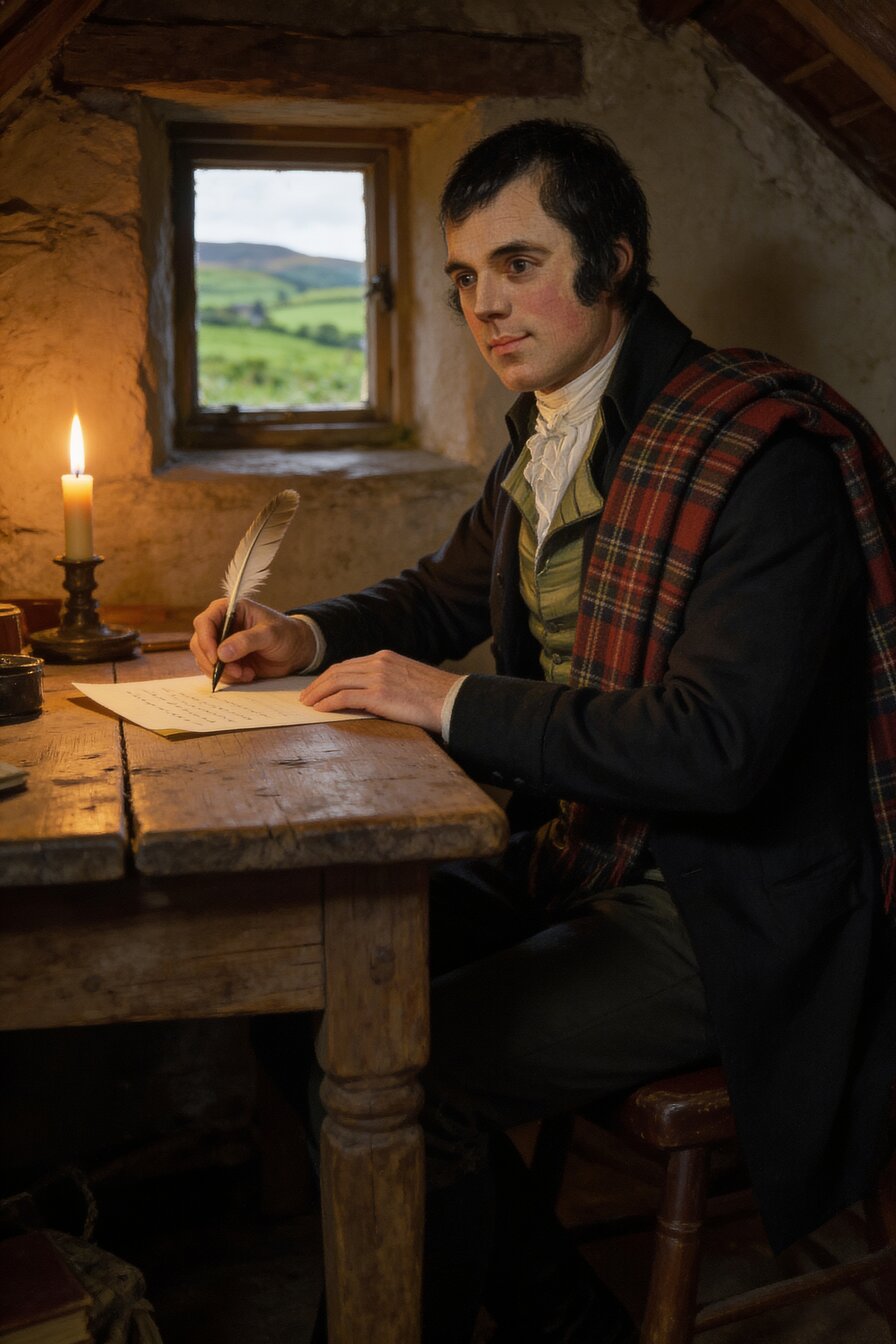
Scotland's national poet — 'The Bard', as Scots call him — wrote in the Scots language, in English mixed with Scots words, and in standard English. He also rescued many traditional folk songs, reworking their lyrics or adding his own. His most famous song is Auld Lang Syne, still sung in the UK and around the world when the New Year arrives — Hogmanay, as the celebration is known in Scotland.
The Enlightenment
Through the 18th century a wave of fresh thinking swept politics, philosophy and science — a movement remembered as 'the Enlightenment' — and a striking number of its great minds were Scottish. Adam Smith laid the foundations of economics that people still argue over today. David Hume changed how philosophers think about human nature, and still does. James Watt's work on steam power fed directly into the Industrial Revolution. And one Enlightenment principle above all has lasted: that everyone has the right to their own political and religious beliefs, and the state has no business dictating them. The UK holds to that principle today.
The Industrial Revolution
Until the 18th century, farming employed more people in Britain than anything else, and much of what the country made — cloth, lace and other goods — was produced at home in 'cottage industries'. Then industry took off. The Industrial Revolution was Britain's rapid industrialisation across the 18th and 19th centuries, and Britain was the first country in the world to industrialise on a large scale. Machinery and steam power drove the change: farming and manufacturing were mechanised, output soared, and the new factories demanded coal and raw materials. People streamed out of the countryside into mining and manufacturing towns.
The Bessemer process made it possible to mass-produce steel, and with cheap steel came great shipyards and the railways. By the height of the revolution, manufacturing had replaced farming as the main source of employment in Britain.
Richard Arkwright (1732–92)
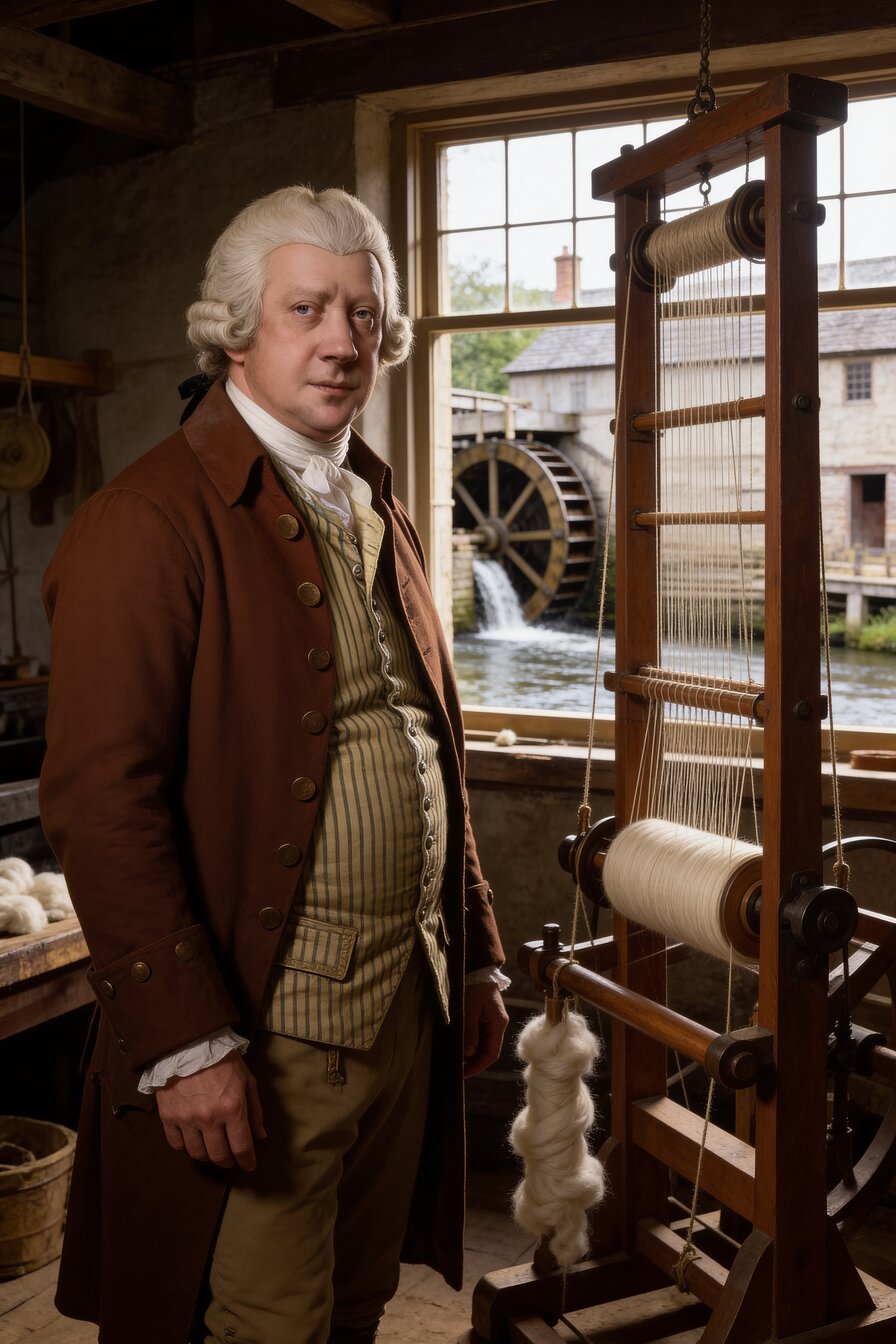
Arkwright, born in 1732, started out as a barber who dyed hair and made wigs. When wigs went out of fashion he switched to textiles — and changed the industry. He improved the carding machine (carding is how fibres are prepared for spinning into yarn and fabric), developed spinning mills driven by horses using a single machine, and later put the steam engine to work driving factory machinery. What he is really remembered for is how he ran his factories: efficiently, and very profitably.
All those raw materials and finished goods had to move, so Britain dug canals — linking factories to towns, cities and ports, especially across the new industrial belt in the middle and north of England. Inside the factories, conditions were grim. No laws protected employees, hours were long, the work was dangerous — and children worked too, treated no differently from adults, and sometimes worse.
Colonies and trade
This was also the age when Britain's overseas reach exploded. Captain James Cook charted the coast of Australia, and colonies were planted there. Britain won control of Canada. The East India Company — a business created to trade — ended up ruling large parts of India. British colonies began to appear in southern Africa. Trade circled the globe: sugar and tobacco flowed in from North America and the West Indies; textiles, tea and spices came from India and from the islands that are now Indonesia. Chasing the same trade and territory brought Britain into repeated conflict with other powers — France above all, which was expanding through many of the same parts of the world.
Sake Dean Mahomet (1759–1851)
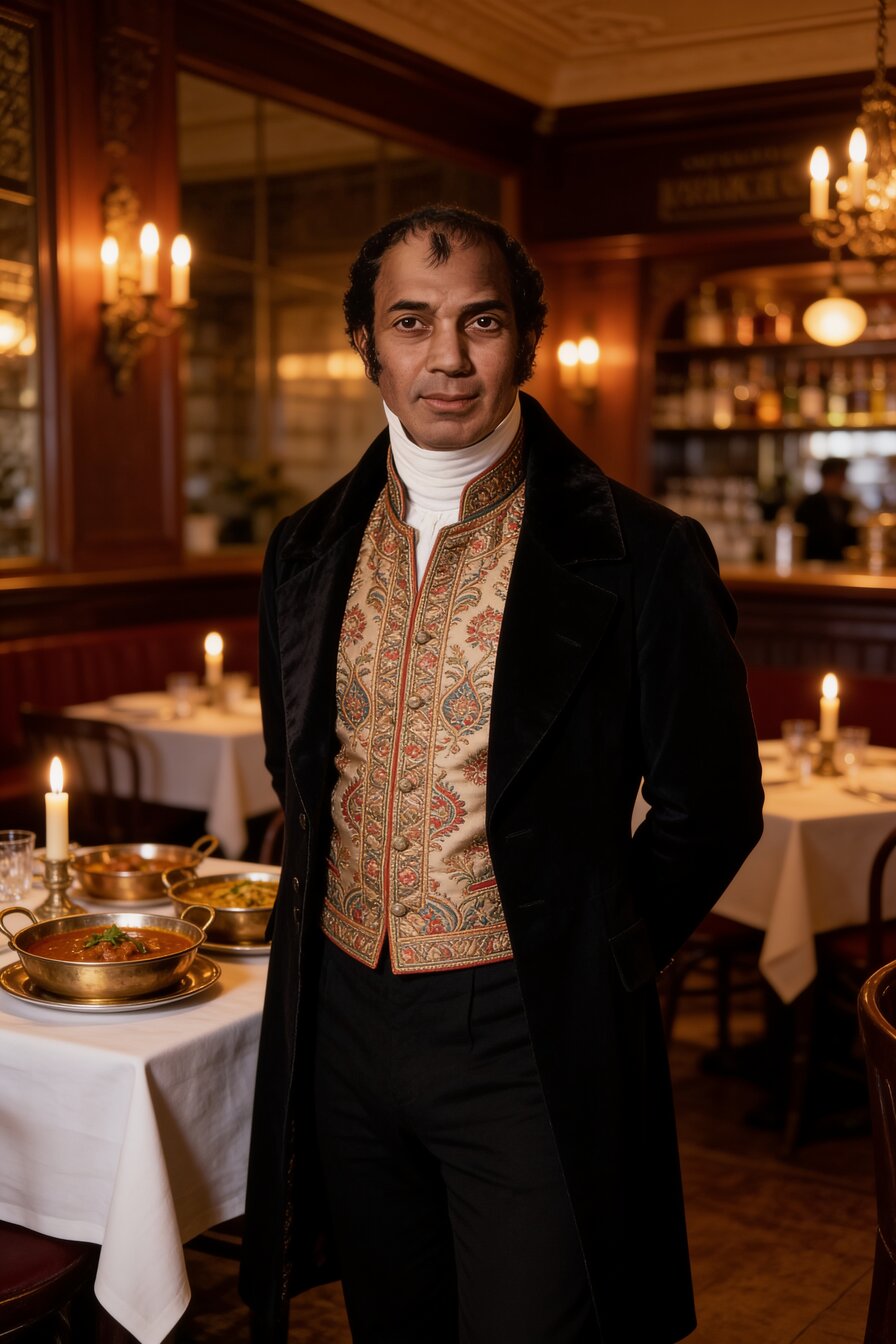
Mahomet was born in 1759 and grew up in Bengal, in India. He served in the Bengal army, came to Britain in 1782, then moved to Ireland — where in 1786 he eloped with an Irish girl, Jane Daly — before returning to England around the turn of the century. In 1810 he opened the Hindoostane Coffee House in George Street, London: the first curry house ever to open in Britain. He and his wife also introduced Britain to 'shampooing' — the Indian art of head massage.
The slave trade
Britain's booming trade had a brutal engine behind part of it: the slave trade. Slavery was illegal inside Britain itself, yet by the 18th century it was a fully established overseas industry, dominated by Britain and the American colonies. Enslaved people were seized mainly in West Africa and carried across the Atlantic on British ships in horrific conditions, to be put to work on the tobacco and sugar plantations of America and the Caribbean. They were treated appallingly. Many tried to escape; many others rose up in revolt against their owners.
Opposition grew at home. The Quakers founded the first organised anti-slavery groups in the late 1700s and petitioned Parliament to outlaw the trade. William Wilberforce — an evangelical Christian and a member of Parliament — worked with his fellow abolitionists (campaigners for the abolition of slavery) and succeeded in turning the public against it. In 1807 it became illegal to trade slaves aboard British ships or from British ports; in 1833 the Emancipation Act abolished slavery across the whole British Empire. The Royal Navy then hunted down other countries' slave ships, freeing the captives and punishing the traders. But the plantations still wanted cheap labour: after 1833, around 2 million Indian and Chinese workers were brought in to replace the freed slaves — on sugar plantations in the Caribbean, in South African mines, on railway-building in East Africa, and in the army in Kenya.
The American War of Independence
By the 1760s Britain's North American colonies were substantial, wealthy, and used to running their own affairs. Many colonist families had crossed the Atlantic in search of religious freedom; they were well educated and steeped in ideas of liberty. So when the British government tried to tax them, they saw an attack on their freedom and answered with a famous demand: 'no taxation without representation' in the British Parliament. Parliament backed down on some of the taxes, but the relationship kept getting worse until fighting broke out between colonists and British forces. In 1776, 13 American colonies declared their independence, insisting that people have the right to set up their own governments. The colonists went on to defeat the British army, and in 1783 Britain recognised their independence.
War with France
Britain and France clashed in war after war through the 18th century — and the biggest fight was still to come. Revolution swept France in 1789, and the new French government was soon at war with Britain. Napoleon, who rose to become Emperor of France, kept the war going. At sea, the Royal Navy faced the French and Spanish fleets combined — and beat them at the Battle of Trafalgar in 1805. The British commander, Admiral Nelson, was killed in his moment of victory; Nelson's Column in Trafalgar Square, London, is his monument, and his flagship HMS Victory can still be visited in Portsmouth. The army fought the French on land, and in 1815 the French Wars finally ended at the Battle of Waterloo, where the Duke of Wellington defeated Napoleon. Wellington was nicknamed the Iron Duke, and later became Prime Minister himself.
The Union Flag
Ireland had shared its monarch with England and Wales ever since Henry VIII, yet it had stayed a separate country. That ended with the Act of Union of 1800: from 1801, Ireland was joined with England, Scotland and Wales in the United Kingdom of Great Britain and Ireland. The union got a symbol — a new version of the official flag, the Union Flag (most people call it the Union Jack), which is still the UK's official flag today. It weaves together three crosses, one for each of England, Scotland and Ireland: the cross of St George, England's patron saint — a red cross on a white ground; the cross of St Andrew, Scotland's patron saint — a diagonal white cross on a blue ground; and the cross of St Patrick, Ireland's patron saint — a diagonal red cross on a white ground.
Wales has its own official flag, showing the Welsh dragon. The dragon is missing from the Union Flag for a historical reason: when the very first Union Flag was put together in 1606 from the flags of England and Scotland, the Principality of Wales was already united with England.
The Victorian Age
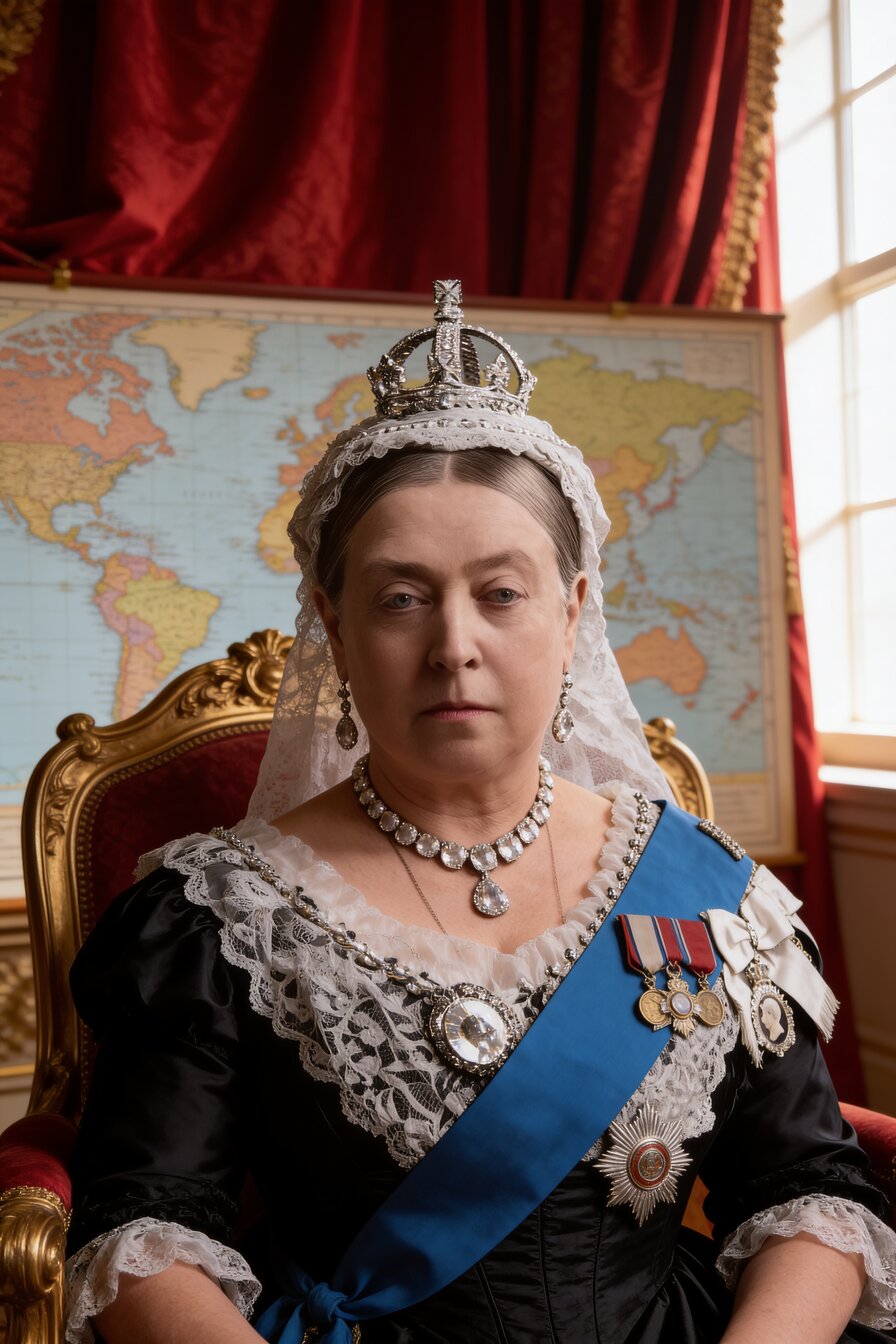
In 1837 an 18-year-old became queen of the United Kingdom: Victoria. She reigned until 1901 — almost 64 years — and the era carries her name, the Victorian Age. Abroad, Britain's power and influence kept growing. At home, the middle classes counted for more and more, and reformers fought to make life better for the poor.
The British Empire
Under Victoria the British Empire swelled to take in all of India, Australia and large parts of Africa. It became the largest empire the world has ever seen, home to an estimated population of more than 400 million people.
People moved on a huge scale. Emigration was encouraged, and between 1853 and 1913 as many as 13 million British citizens left the country. Others kept arriving: between 1870 and 1914 around 120,000 Russian and Polish Jews came to Britain to escape persecution, many settling in London's East End and in Manchester and Leeds, and people from across the Empire — including India and Africa — came to Britain to live, work and study.
Trade, factories and railways
Britain remained a great trading nation, and the government pushed free trade, scrapping many taxes on imported goods. The best-known example came in 1846, when the Corn Laws — which had kept cheap grain out of the country — were repealed. Cheaper imported raw materials gave British industry another boost. Factory life slowly improved too: in 1847 the law capped the working day for women and children at 10 hours, and better housing for workers began to go up.
Getting people and goods around became far easier. Just before Victoria took the throne, George Stephenson and his son Robert pioneered the railway engine, and the Victorian years saw a massive expansion of the railways — built across the Empire as well as at home. Engineering leapt forward in other ways too, such as the great bridges of Isambard Kingdom Brunel.
Isambard Kingdom Brunel (1806–59)
Brunel, from Portsmouth in England, was an engineer who built tunnels, bridges, railway lines and ships. His Great Western Railway was the first major railway built in Britain, running from Paddington Station in London to the south west of England, the West Midlands and Wales. Many of the bridges he designed are still in use today.
British industry led the world in the 19th century: the UK turned out more than half of the world's iron, coal and cotton cloth, and grew into a centre for financial services such as insurance and banking. The era's confidence was put on show in 1851, when the Great Exhibition opened in Hyde Park inside the Crystal Palace — a vast building of iron and glass. Its exhibits ran from huge machines to handmade goods; countries from all over the world displayed their wares, but most of the objects on show were made in Britain.
The Crimean War
From 1853 to 1856 Britain fought alongside Turkey and France against Russia in the Crimean War — the first war reported extensively to the public through news stories and photographs. Conditions were dreadful: more soldiers died of the illnesses they caught in hospital than of their battle wounds. It was during this war that Queen Victoria introduced the Victoria Cross medal, which honours acts of valour by soldiers.
Florence Nightingale (1820–1910)
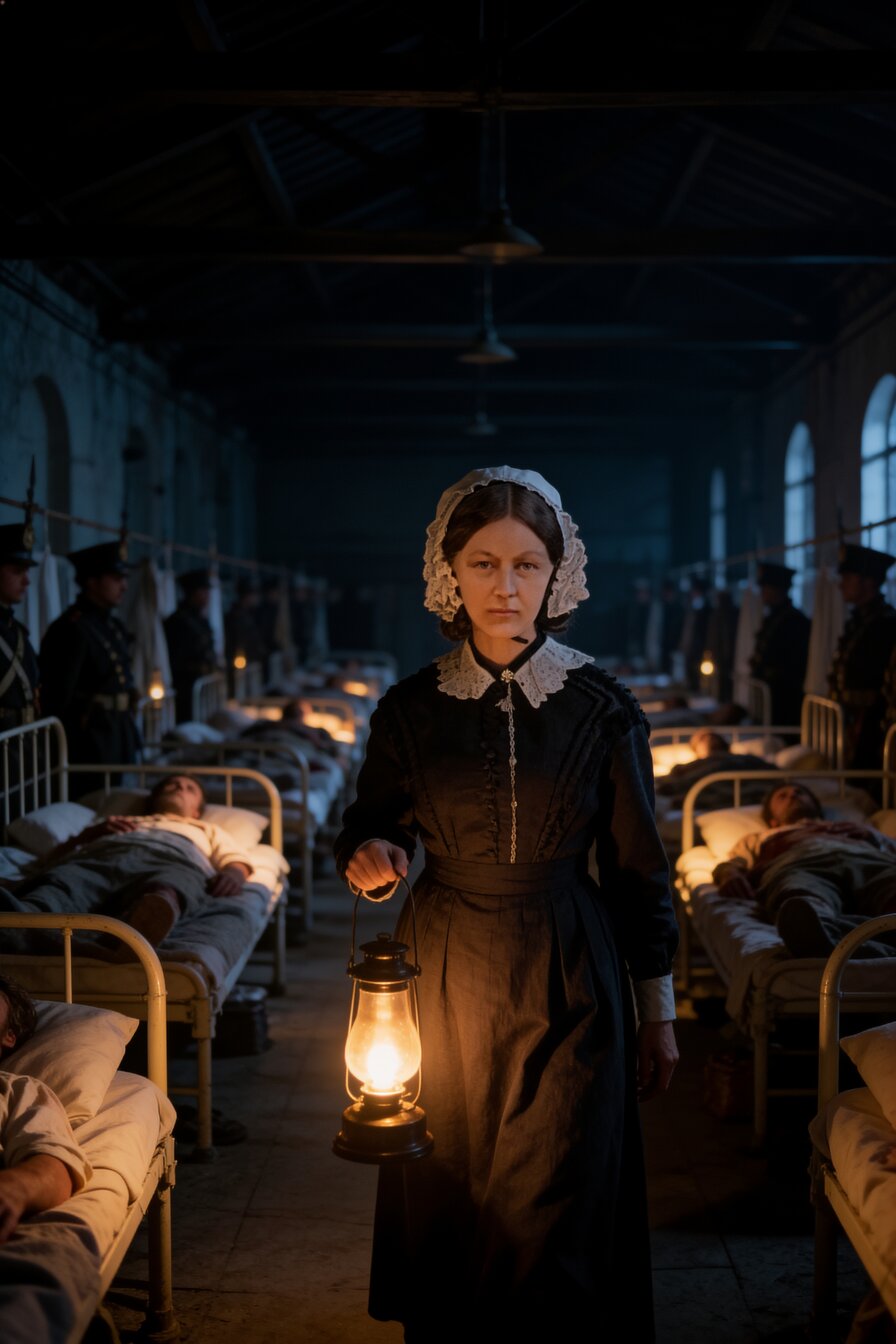
Florence Nightingale was born in Italy to English parents and trained as a nurse in Germany at the age of 31. In 1854 she went to Turkey to work in the military hospitals treating soldiers from the Crimean War. She and her fellow nurses transformed conditions there and brought the death rate down. In 1860 she founded the Nightingale Training School for nurses at St Thomas' Hospital in London — the first school of its kind, and one that still exists today, along with many of the practices she pioneered. She is widely regarded as the founder of modern nursing.
Ireland in the 19th century
Life in Ireland lagged behind the rest of the UK. Two-thirds of its people still lived off farming, often scraping a living from very small plots, and for many the potato made up a large share of every meal. When the potato crop failed in the middle of the century, Ireland fell into famine. A million people died of starvation and disease, and another million and a half left the country — some for the United States, others for England. By 1861, cities such as Liverpool, London, Manchester and Glasgow held large Irish populations.
Through the same century the Irish Nationalist movement gathered real strength. It did not speak with one voice: the Fenians wanted complete independence from Britain, while others — most famously Charles Stuart Parnell — argued for 'Home Rule', under which Ireland would stay in the UK but run its own parliament.
The right to vote
As the middle classes of the wealthy industrial towns grew in influence, they demanded political power to match. The Reform Act of 1832 delivered a big piece of it: far more people could now vote, the old pocket and rotten boroughs were swept away, and seats in Parliament moved to the towns and cities. Political power had shifted permanently from the countryside to the towns — but the vote still depended on owning property, which kept the working class shut out.
A campaign grew to win the vote for working people and others without property. Its campaigners, the Chartists, carried petitions to Parliament. For a long time they seemed to have failed — but in 1867 a second Reform Act arrived, creating many more urban seats and lowering the property bar for voting. Even then, most men still could not vote, and no women could.
More voters changed politics itself: a politician who wanted a seat now had to persuade ordinary people to choose them, so the parties built organisations to reach out to voters. Universal suffrage — the right of every adult, male or female, to vote — followed in the next century.
Women in 19th-century Britain, as across Europe, had fewer rights than men. Until 1870, everything a married woman earned or owned passed automatically to her husband. Acts of Parliament in 1870 and 1882 changed that, giving wives the right to keep their own earnings and property. Towards the end of the century and into the next, growing numbers of women campaigned and demonstrated for more rights — above all, the vote. They built the women's suffrage movement, and its members became known as 'suffragettes'.
Emmeline Pankhurst (1858–1928)
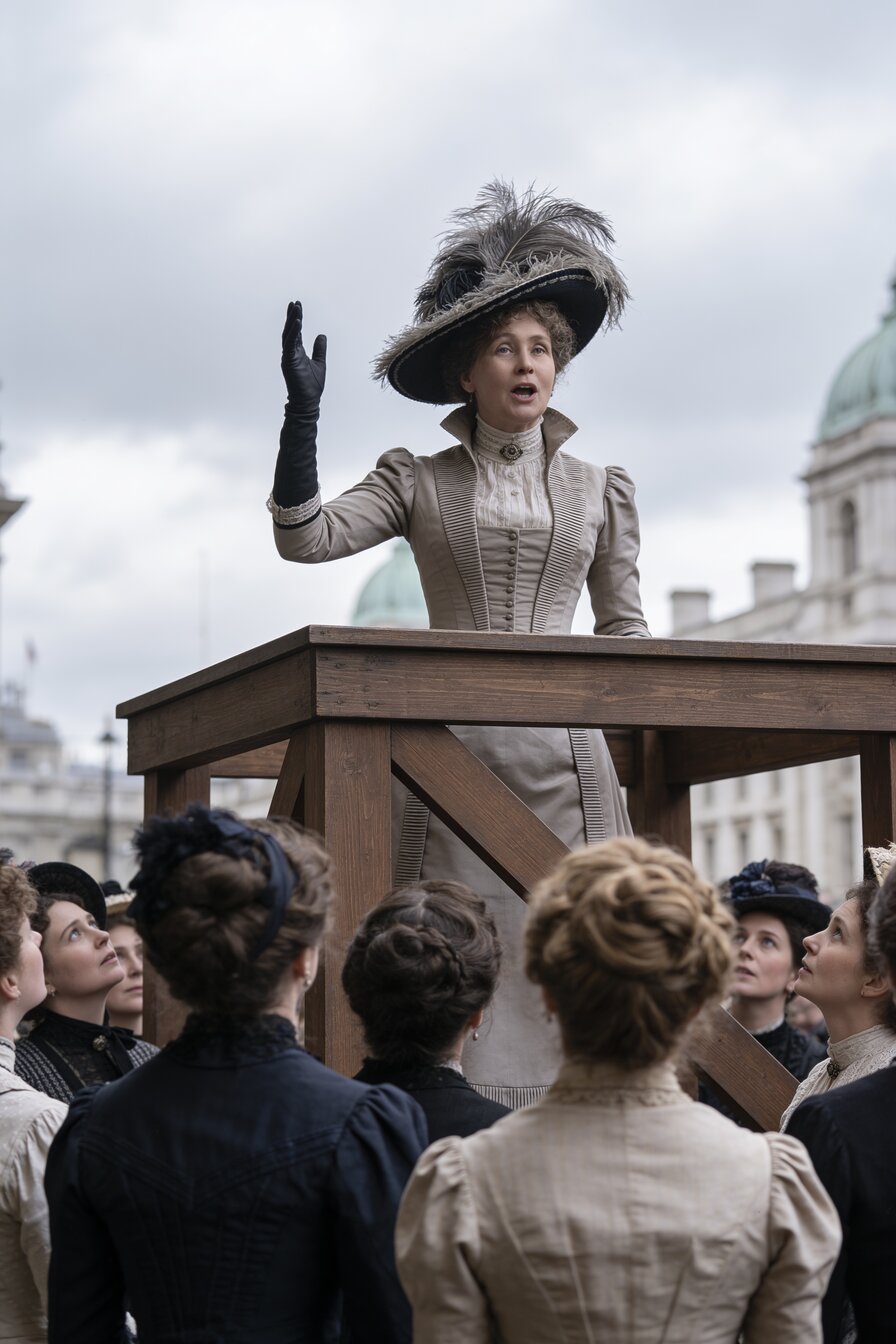
Born in Manchester in 1858, Emmeline Pankhurst founded the Women's Franchise League in 1889 to win married women the vote in local elections, and in 1903 helped found the Women's Social and Political Union (WSPU) — the first group whose members were called 'suffragettes'. The WSPU turned to civil disobedience: chaining themselves to railings, smashing windows, committing arson. Many of its women, Pankhurst among them, went on hunger strike. In 1918 — partly in recognition of what women had contributed to the war effort in the First World War — women over 30 won the right to vote and to stand for Parliament, and the vote was extended to all men over 21. Shortly before Pankhurst died in 1928, women finally got the vote at 21, on equal terms with men.
The future of the Empire
The British Empire kept growing until the 1920s, but by the late 19th century Britain was already arguing about where it was heading. Supporters of expansion pointed to the trade and commerce the Empire brought. Critics answered that it was over-stretched, and that the constant conflicts flaring across it — on India's north-west frontier, in southern Africa — drained Britain's resources. Even so, the great majority of British people believed the Empire was a force for good in the world.
The Boer War of 1899 to 1902 made that argument urgent. Britain went to war in South Africa against the Boers, settlers descended from the Netherlands, who fought fiercely for over three years. Many died in battle and many more of disease. Public sympathy for the Boers grew, and people began asking openly whether the Empire could carry on. As its different territories developed, they won more freedom and autonomy from Britain — and by the second half of the 20th century the Empire had, for the most part, made an orderly transition into the Commonwealth, its countries being granted independence.
Rudyard Kipling (1865–1936)
Rudyard Kipling was born in India in 1865 and went on to live in India, the UK and the USA. His books and poems, set in both India and the UK, carried the era's belief that the British Empire was a force for good. He won the Nobel Prize in Literature in 1907. His books include the Just So Stories and The Jungle Book, still loved today, and his poem If has often been voted among the UK's favourite poems.