Life in the UK Test — The Story of Britain · Part 4: free study guide (2026)
Updated 22 August 2026
History Part 4: The 20th century, Britain since 1945. Everything the official study material covers in this chapter, rewritten in plain English — 2 topics, ~4000 words. Read it here, or open it in the free app for illustrations, audio, films and progress tracking.
Study this chapter in the app — free
The 20th Century
The First World War
The century began well for Britain. With its vast Empire, admired navy, thriving industry and strong political institutions, the country was — in today's language — a global 'superpower'. Life at home was improving too: governments brought in financial help for the unemployed, old-age pensions and free school meals, passed laws to make workplaces safer, tightened town-planning rules to stop new slums spreading, and gave better support to mothers and their children after a divorce or separation. Local government became more democratic, and MPs were paid a salary for the first time — which opened public life to people who could not otherwise have afforded it.
That era of optimism ended abruptly. On 28 June 1914, Archduke Franz Ferdinand of Austria was assassinated, setting off the chain of events that led to the First World War (1914–18). The assassination was only the trigger; the conditions for war had been building for years — rising nationalism in many European states, growing militarism, imperialism, and the division of the major European powers into two rival camps.
Though centred in Europe, it was a genuinely global war. Britain fought as one of the Allied Powers — alongside, among others, France, Russia, Japan, Belgium and Serbia, joined later by Greece, Italy, Romania and the United States — against the Central Powers: mainly Germany, the Austro-Hungarian Empire and the Ottoman Empire, with Bulgaria joining them later. The whole British Empire was drawn in. More than a million Indians fought on Britain's behalf in many different countries, and around 40,000 of them were killed; men from the West Indies, Africa, Australia, New Zealand and Canada fought with the British too. Millions of people were killed or wounded, more than 2 million of the casualties British — and the British attack on the Somme in July 1916 produced about 60,000 British casualties on its first day alone. The war ended at 11.00 am on 11 November 1918, with victory for Britain and its allies.
The partition of Ireland
In 1913 the British government promised Ireland 'Home Rule': a self-governing Ireland with its own parliament, still inside the UK. A Home Rule Bill went before Parliament, but Protestants in the north of Ireland opposed it and threatened to resist it by force. When the First World War broke out, the government shelved the whole question. Irish Nationalists were not willing to wait: in 1916 they rose against the British in Dublin — the Easter Rising — and the leaders of the uprising were executed under military law. A guerrilla war against the British army and the police in Ireland followed. A peace treaty was signed in 1921, and in 1922 Ireland became two countries: the six mainly Protestant counties of the north stayed in the UK as Northern Ireland, while the rest became the Irish Free State, with its own government — and, in 1949, a republic.
On both sides of the new border there were people who rejected the split and still wanted one independent Ireland. Years of disagreement hardened into a terror campaign in Northern Ireland and elsewhere; the conflict between those wanting full Irish independence and those loyal to the British government is often called 'the Troubles'.
The inter-war period
For many people the 1920s brought better living conditions, with improved public housing and new homes going up in towns and cities. Then, in 1929, the world slid into the Great Depression, and parts of the UK suffered mass unemployment. The depression of the 1930s hit unevenly: traditional heavy industries such as shipbuilding were badly damaged, while newer industries — cars, aviation — grew. Because prices generally fell, people who kept their jobs had more money to spend; car ownership doubled from 1 million to 2 million between 1930 and 1939, and many new houses were built. Culture flourished as well, with writers such as Graham Greene and Evelyn Waugh prominent and the economist John Maynard Keynes publishing influential new theories. The BBC began radio broadcasts in 1922 — and in 1936 launched the world's first regular television service.
The Second World War
Adolf Hitler came to power in Germany in 1933, convinced that the conditions imposed on Germany by the Allies after the First World War were unfair, and set on winning more land for the German people. He renegotiated treaties, built up Germany's arms, and tested its military strength in nearby countries. The British government tried to avoid another war — but when Hitler invaded Poland in 1939, Britain and France declared war to stop his aggression.
The war set the Axis powers — fascist Germany and Italy, with the Empire of Japan — against the Allies, whose main members were the UK, France, Poland, Australia, New Zealand, Canada and the Union of South Africa. Hitler had already occupied Austria and invaded Czechoslovakia; after Poland he took control of Belgium and the Netherlands, and in 1940 German forces defeated the allied troops and drove on through France. In that moment of national crisis, Winston Churchill became Prime Minister and Britain's war leader.
Winston Churchill (1874–1965)
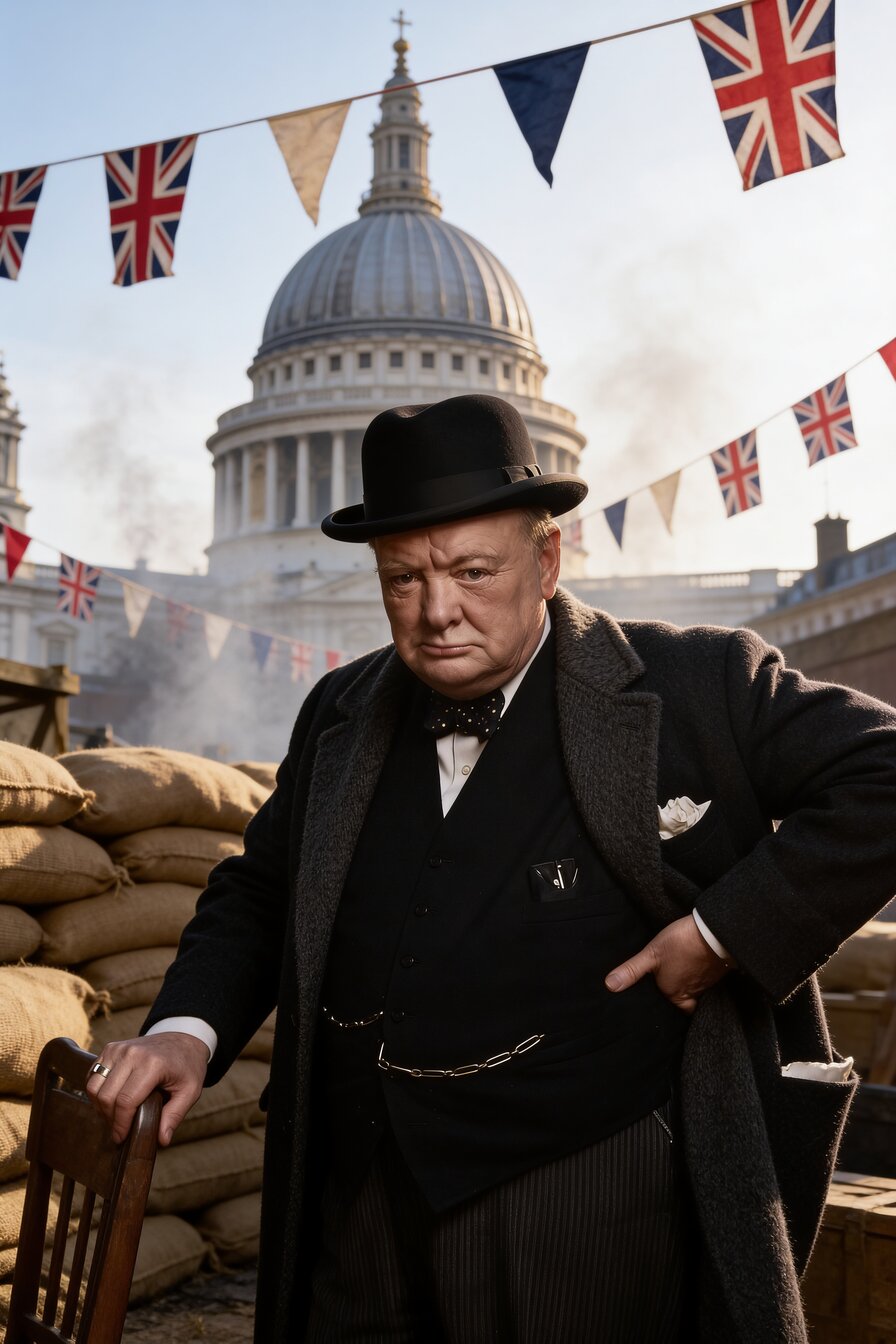
The son of a politician, Churchill worked as a soldier and a journalist before entering Parliament as a Conservative MP in 1900. He became Prime Minister in May 1940, refused to surrender to the Nazis, and inspired the British people through a time of great hardship. He lost the 1945 General Election but returned as Prime Minister in 1951, and stayed an MP until he stood down at the 1964 General Election. On his death in 1965 he was honoured with a state funeral, and in 2002 the public voted him the greatest Briton of all time. His wartime speeches left the language lines still heard today: 'I have nothing to offer but blood, toil, tears and sweat' — his first speech to the House of Commons as Prime Minister, 1940; 'we shall fight on the beaches… we shall never surrender' — to the Commons after Dunkirk, 1940; and 'Never in the field of human conflict was so much owed by so many to so few' — during the Battle of Britain, 1940.
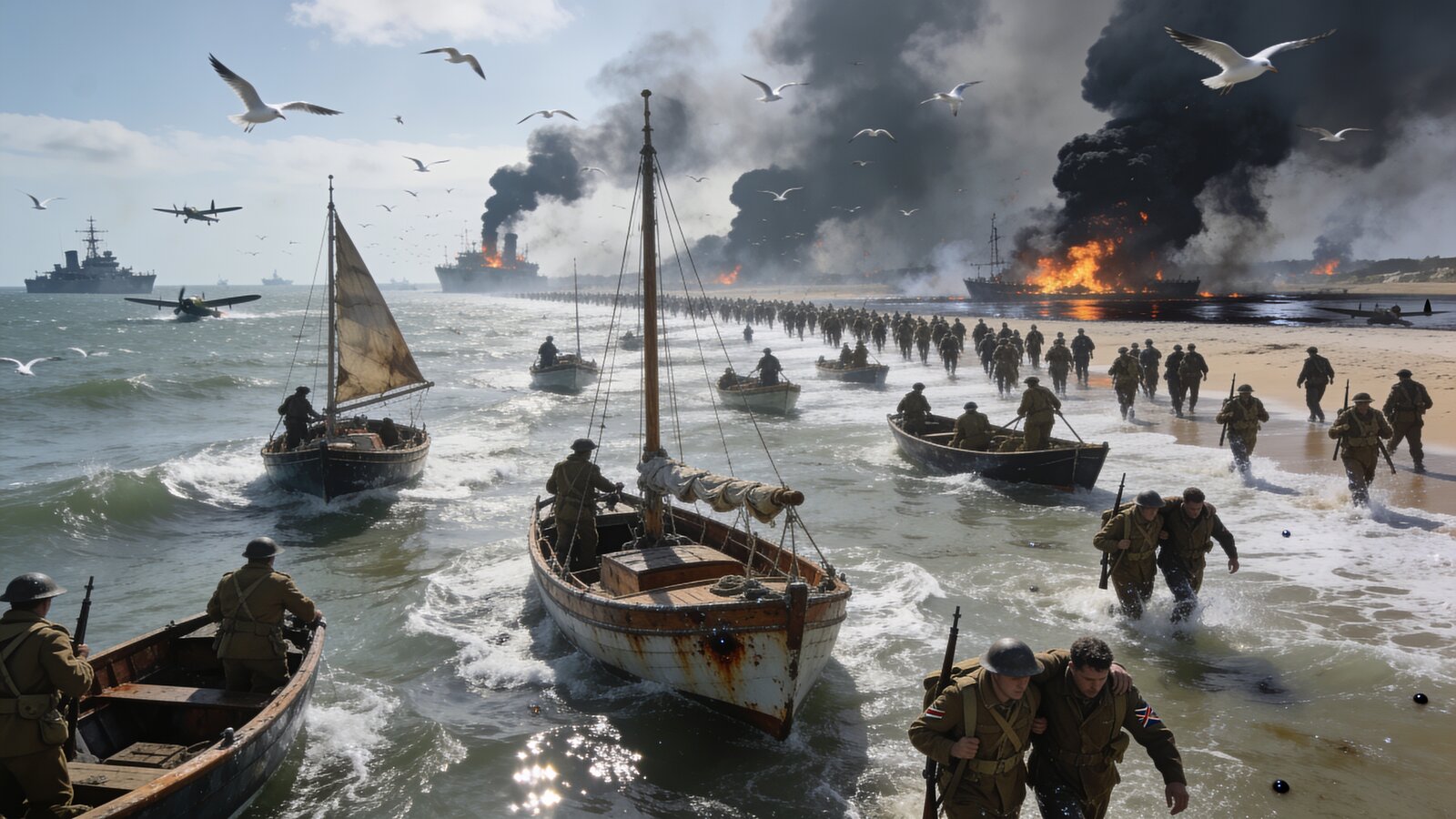
As France fell, Britain mounted a huge naval operation to evacuate British and French soldiers, and civilian volunteers sailed small pleasure and fishing boats across to help the Navy lift more than 300,000 men off the beaches around Dunkirk. Many lives and a great deal of equipment were lost, but the rescue succeeded, and Britain was better able to fight on — the evacuation gave English the phrase 'the Dunkirk spirit'. From the end of June 1940 until Germany invaded the Soviet Union in June 1941, Britain and its Empire stood almost alone against Nazi Germany.
Hitler wanted to invade Britain — but first Germany had to control the air. Through the summer of 1940 the German air campaign was beaten off by British fighter planes, and the British won the crucial aerial battle, 'the Battle of Britain'. The Royal Air Force's most important planes in that fight were the Spitfire and the Hurricane, both designed and built in Britain. The German air force could still bomb by night, though: in the Blitz, London and other British cities were bombed after dark, Coventry was almost totally destroyed, and the East End of London suffered terribly. The country's defiance through it all gave English another phrase still used today — 'the Blitz spirit'.
Britain was fighting the Axis on many other fronts at the same time. In Singapore the Japanese defeated the British and went on to occupy Burma, threatening India. The United States entered the war after Japan bombed its naval base at Pearl Harbour in December 1941 — the same year Hitler attempted the largest invasion in history, attacking the Soviet Union. That ferocious campaign brought huge losses on both sides; the Soviets ultimately repelled the German forces, and the damage Germany sustained proved a pivotal point in the war.
The allied forces gradually gained the upper hand, winning significant victories in North Africa and Italy. Germany's losses in the Soviet Union, combined with American support, left the Allies strong enough to strike at Hitler's forces in western Europe. On 6 June 1944 — the event usually called 'D-Day' — allied forces landed in Normandy, then pressed on through France and into Germany itself, comprehensively defeating Germany in May 1945. The war against Japan ended in August 1945, when the United States dropped its newly developed atom bombs on the Japanese cities of Hiroshima and Nagasaki. The science behind those weapons had British roots: the first team to 'split the atom' was led by the New-Zealand-born Ernest Rutherford, working at Manchester and then Cambridge University, and some British scientists went on to join the Manhattan Project in the United States, which developed the atomic bomb. The war was finally over.
Alexander Fleming (1881–1955)
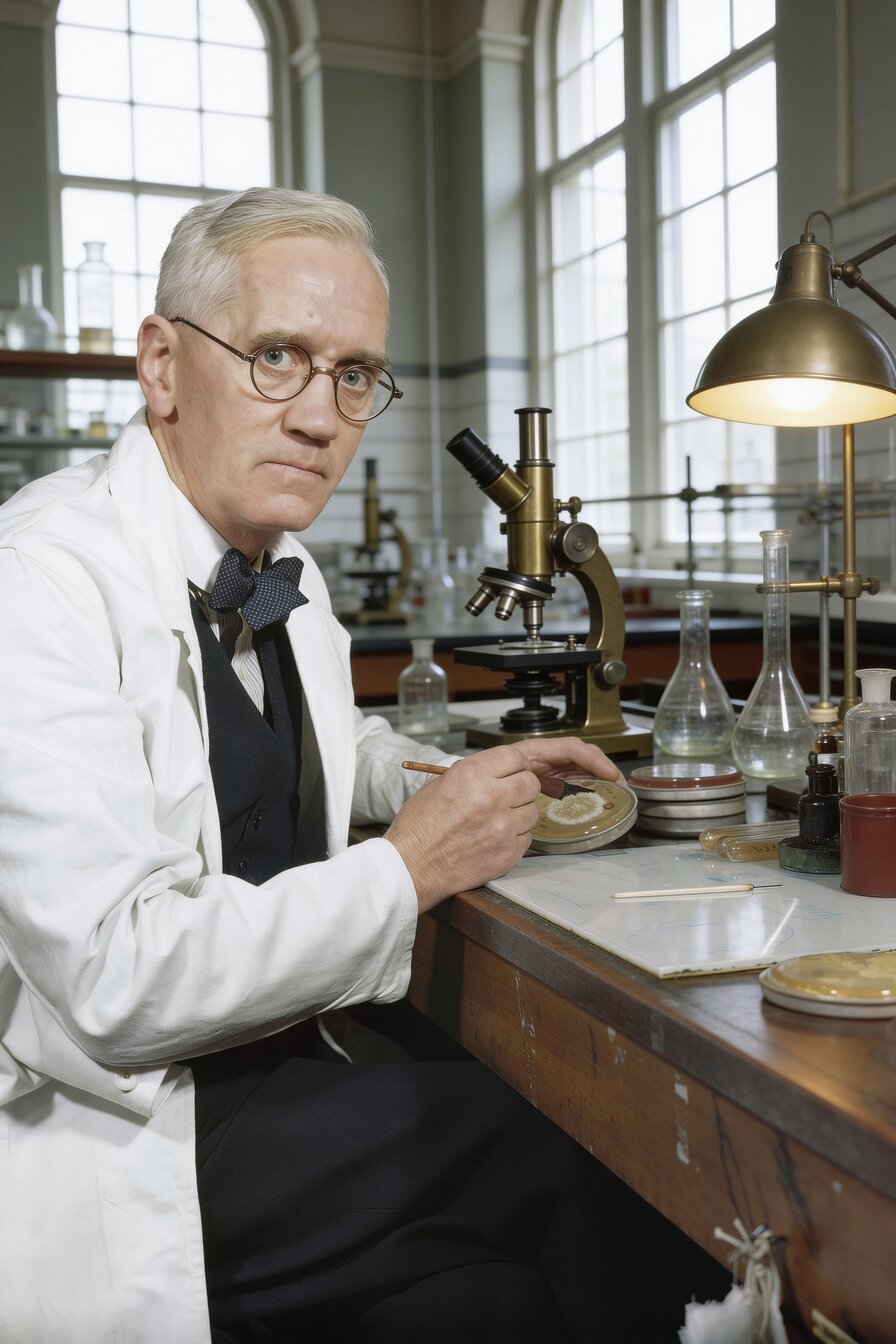
Born in Scotland, Alexander Fleming moved to London as a teenager and later qualified as a doctor. In 1928, while researching influenza (the 'flu'), he discovered penicillin. The scientists Howard Florey and Ernst Chain then developed it into a usable drug, in mass production by the 1940s. Fleming won the Nobel Prize in Medicine in 1945 — and penicillin is still used to treat bacterial infections today.
Britain Since 1945
The welfare state
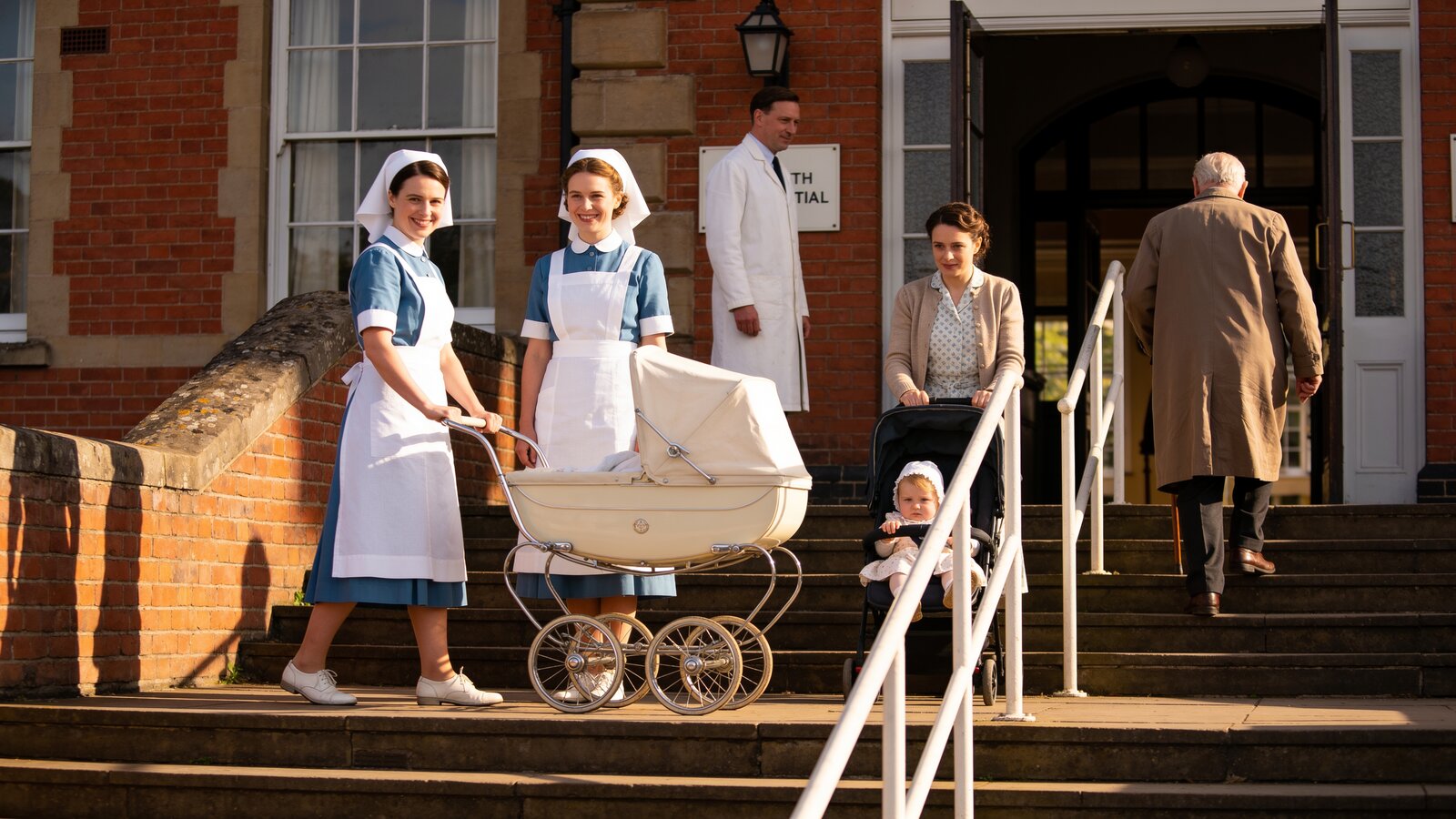
Britain won the war but came out of it economically exhausted — and its people wanted change. The war years had already brought significant reforms to the education system, and there was an appetite for much wider social reform. In 1945 the British people elected a Labour government under Clement Attlee, who promised to build the welfare state set out in the Beveridge Report. In 1948, Aneurin (Nye) Bevan, the Minister for Health, led the creation of the National Health Service (NHS), guaranteeing a minimum standard of health care for all, free at the point of use. A national system of benefits — 'social security' — was introduced so that people would be protected from the 'cradle to the grave', and the government took the railways, coal mines and the gas, water and electricity supplies into public ownership (nationalisation).
Change reached the Empire too: former colonies began to govern themselves. In 1947 nine countries were granted independence, including India, Pakistan and Ceylon (now Sri Lanka), and other colonies in Africa, the Caribbean and the Pacific followed over the next 20 years. The UK developed its own atomic bomb and joined the new North Atlantic Treaty Organization (NATO), an alliance of nations formed to resist the perceived threat of invasion by the Soviet Union and its allies. A Conservative government held office from 1951 to 1964, and the 1950s brought economic recovery and growing prosperity for working people; the Prime Minister of the day, Harold Macmillan, became famous for his 'wind of change' speech about decolonisation and independence for the countries of the Empire.
Clement Attlee (1883–1967)
Clement Attlee was born in London in 1883, the son of a solicitor. After Oxford University he became a barrister, but gave it up to do social work in East London, and eventually became a Labour MP. He served as Winston Churchill's Deputy Prime Minister in the wartime coalition government, then became Prime Minister when Labour won the 1945 election, serving from 1945 to 1951 and leading the Labour Party for 20 years. His government nationalised major industries such as coal and steel, created the National Health Service, carried through many of Beveridge's plans for a stronger welfare state, and introduced measures to improve conditions for workers.
William Beveridge (1879–1963)
William Beveridge — later Lord Beveridge — was a British economist and social reformer. He served briefly as a Liberal MP and later led the Liberals in the House of Lords, but he is remembered above all for the 1942 report Social Insurance and Allied Services, known as the Beveridge Report. Commissioned by the wartime government in 1941, it urged the government to find ways of fighting the five 'Giant Evils' of Want, Disease, Ignorance, Squalor and Idleness — and it provided the basis of the modern welfare state.
R A Butler (1902–82)
Richard Austen Butler — later Lord Butler — was born in 1902 and became a Conservative MP in 1923. Given responsibility for education in 1941, he oversaw the Education Act 1944, often called 'The Butler Act', which introduced free secondary education in England and Wales. The education system has changed a great deal since, but the division between primary and secondary schools that the Act enforced still remains in most areas of Britain.
Dylan Thomas (1914–53)
Dylan Thomas was a Welsh poet and writer who often read and performed his work in public, including for the BBC. His best-known works are the radio play Under Milk Wood, first performed in 1954 after his death, and the poem Do Not Go Gentle into That Good Night, written for his dying father in 1952. He died at just 39 in New York. His birthplace, Swansea, remembers him with several memorials, including a statue and the Dylan Thomas Centre.
Migration in post-war Britain
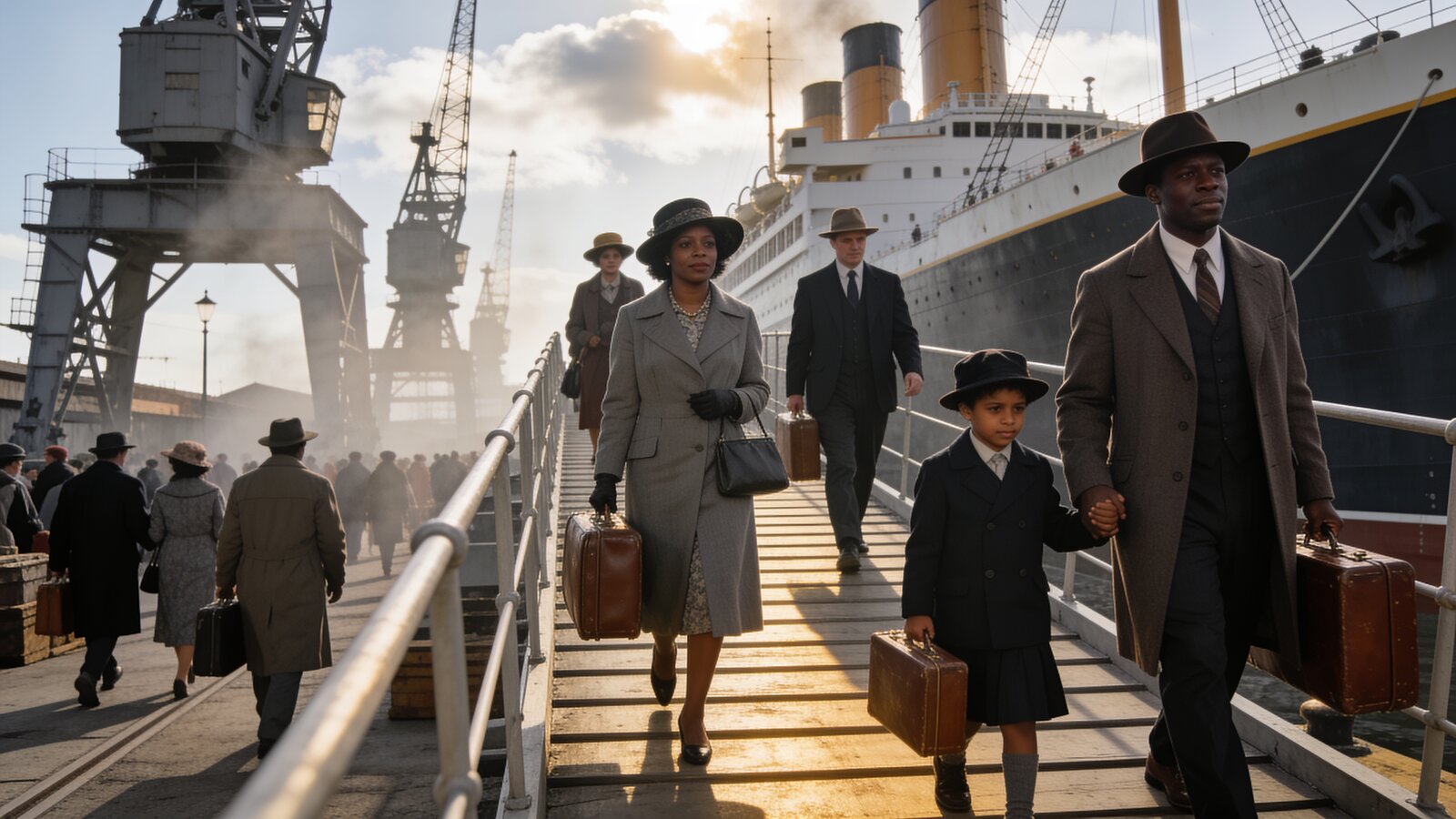
Rebuilding Britain after the Second World War was an enormous task, and there were not enough workers to do it. The government encouraged workers from Ireland and other parts of Europe to come and help with the reconstruction, and in 1948 people from the West Indies were also invited to come and work. The labour shortage continued through the 1950s, so immigration went on being encouraged for economic reasons, with many industries advertising for workers from overseas: recruitment centres were set up in the West Indies to find bus drivers, and textile and engineering firms from the north of England and the Midlands sent agents to India and Pakistan. For about 25 years, people from the West Indies, India, Pakistan and — later — Bangladesh travelled to Britain to work and settle.
Social change in the 1960s
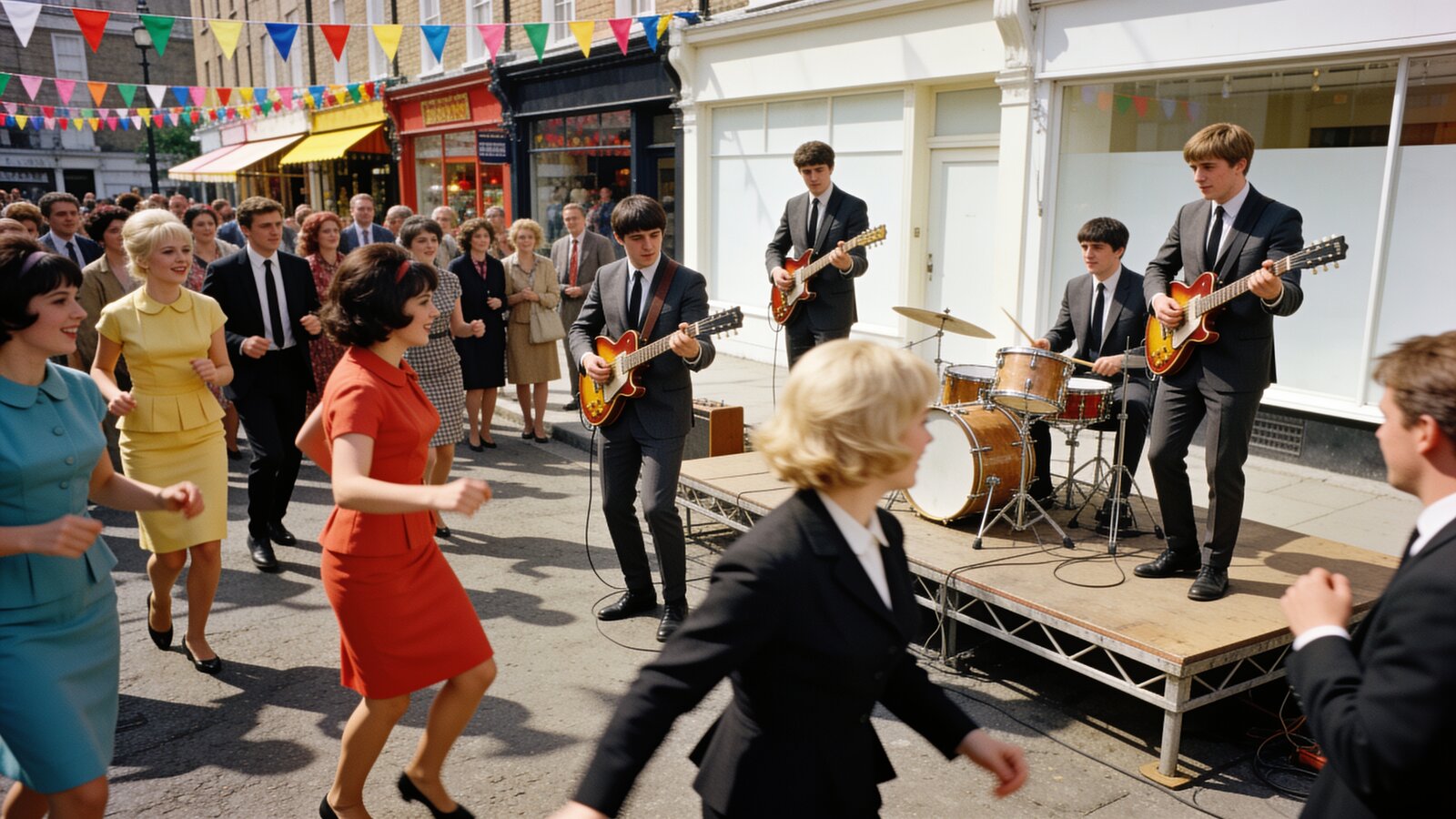
The 1960s became known as 'the Swinging Sixties' — a decade of real social change, with British fashion, cinema and popular music booming. Two of its best-known pop groups were The Beatles and The Rolling Stones. People grew better off, and many bought cars and other consumer goods. It was also the decade in which social laws were liberalised — on divorce, and on abortion in England, Wales and Scotland — and the position of women at work improved: employers at the time commonly expected women to leave their jobs when they married, but Parliament passed new laws giving women the right to equal pay and making it illegal to discriminate against women because of their gender.
Technology moved fast too. Britain and France together developed Concorde, the supersonic commercial airliner, and new styles of architecture — high-rise buildings, concrete and steel — became common. Migration from the West Indies, India, Pakistan and what is now Bangladesh fell in the late 1960s, when the government passed new laws restricting immigration to Britain; immigrants now needed a strong connection to Britain through birth or ancestry. Even so, in the early 1970s Britain admitted 28,000 people of Indian origin who had been forced to leave Uganda.
Some great British inventions of the 20th century
Britain gave the world a remarkable share of the 20th century's inventions. The television was developed in the 1920s by the Scotsman John Logie Baird (1888–1946), who in 1932 made the first television broadcast between London and Glasgow. Radar came from another Scot, Sir Robert Watson-Watt (1892–1973), who proposed that enemy aircraft could be detected by radio waves; the first successful radar test took place in 1935. Radar work led Sir Bernard Lovell (1913–2012) into astronomy — the radio telescope he built at Jodrell Bank in Cheshire was for many years the biggest in the world, and it is still operating today. In the 1930s the British mathematician Alan Turing (1912–54) invented the Turing machine, a theoretical device whose theory shaped computer science and the modern computer. The Scottish physician John Macleod (1876–1935) was co-discoverer of insulin, used to treat diabetes.
The structure of the DNA molecule was discovered in 1953 through work at British universities in London and Cambridge — a discovery that has fed advances in medicine and in fighting crime; Francis Crick (1916–2004), one of the scientists awarded the Nobel Prize for it, was British. The jet engine was developed in Britain in the 1930s by Sir Frank Whittle (1907–96), a Royal Air Force engineer officer, and Sir Christopher Cockerell (1910–99) invented the hovercraft in the 1950s. Britain and France developed Concorde, the supersonic passenger aircraft: it first flew in 1969, carried passengers from 1976, and was retired from service in 2003. The Harrier jump jet, an aircraft that can take off vertically, was also designed and developed in the UK.
In the 1960s James Goodfellow (1937–) invented the cash-dispensing ATM (automatic teller machine), or 'cashpoint' — the first went into use at Barclays Bank in Enfield, north London, in 1967. IVF (in-vitro fertilisation) therapy for treating infertility was pioneered in Britain by the physiologist Sir Robert Edwards (1925–2013) and the gynaecologist Patrick Steptoe (1913–88); the world's first 'test-tube baby' was born in Oldham, Lancashire, in 1978. In 1996 two British scientists, Sir Ian Wilmut (1944–2023) and Keith Campbell (1954–2012), led the first team ever to clone a mammal — Dolly the sheep — opening research into cloning to preserve endangered species and for medical purposes. Sir Peter Mansfield (1933–2017), a British scientist, co-invented the MRI (magnetic resonance imaging) scanner, which lets doctors and researchers see exact, non-invasive images of the body's internal organs and has revolutionised diagnostic medicine. And the World Wide Web was invented by a Briton, Sir Tim Berners-Lee (1955–): information was successfully transferred via the web for the first time on 25 December 1990.
Problems in the economy in the 1970s
In the late 1970s the post-war economic boom ran out. Prices of goods and raw materials rose sharply, and the exchange rate between the pound and other currencies became unstable, causing problems with the 'balance of payments' — imports of goods were valued at more than the price paid for exports. Strikes spread through many industries and services, souring relations between the trade unions and the government, and people began to argue that the unions had grown too powerful and that their activities were harming the UK.
The 1970s were also a decade of serious unrest in Northern Ireland. In 1972 the Northern Ireland Parliament was suspended and Northern Ireland came under direct rule by the UK government. Some 3,000 people lost their lives in the violence in Northern Ireland in the decades after 1969.
Mary Peters (1939–)
Born in Manchester, Mary Peters moved to Northern Ireland as a child. A talented athlete, she won an Olympic gold medal in the pentathlon in 1972, then raised money for local athletics and became team manager for the women's British Olympic team. She continues to promote sport and tourism in Northern Ireland, and in 2000 was made a Dame of the British Empire in recognition of her work.
Europe and the Common Market
In 1957, West Germany, France, Belgium, Italy, Luxembourg and the Netherlands formed the European Economic Community (EEC). The EEC became part of the European Union when the EU was formed in 1993. The UK was a full member of the European Union, though it never used the Euro currency — and it formally left the European Union on 31 January 2020.
Conservative government, 1979–1997
Margaret Thatcher, Britain's first woman Prime Minister, led the Conservative government from 1979 to 1990. Her government restructured the economy, privatising the nationalised industries and putting legal controls on trade union powers, while deregulation greatly expanded the City of London's role as an international centre for investments, insurance and other financial services. Traditional industries such as shipbuilding and coal mining declined. In 1982 Argentina invaded the Falkland Islands, a British overseas territory in the South Atlantic; a naval taskforce was sent from the UK, and military action led to the recovery of the islands. John Major became Prime Minister after Mrs Thatcher, and helped establish the Northern Ireland peace process.
Margaret Thatcher (1925–2013)
Margaret Thatcher was the daughter of a grocer from Grantham in Lincolnshire, and trained as a chemist and as a lawyer. Elected a Conservative MP in 1959, she entered the cabinet in 1970 as Secretary of State for Education and Science, and in 1975 was elected Leader of the Conservative Party — making her Leader of the Opposition. When the Conservatives won the 1979 General Election she became the first woman Prime Minister of the UK, and she went on to be the longest-serving Prime Minister of the 20th century, staying in office until 1990. Her premiership brought major economic reforms; abroad, she worked closely with the United States President, Ronald Reagan, and was one of the first Western leaders to recognise and welcome the changes in the leadership of the Soviet Union that eventually led to the end of the Cold War.
Roald Dahl (1916–1990)
Roald Dahl was born in Wales to Norwegian parents and served in the Royal Air Force during the Second World War. He began publishing books and short stories in the 1940s, and though he also wrote for adults, he is best known for his children's books — among them Charlie and the Chocolate Factory and George's Marvellous Medicine. Several of his books have been made into films.
Labour government, 1997–2010
In 1997 the Labour Party led by Tony Blair was elected. The Blair government introduced a Scottish Parliament, with substantial powers to make laws, and a Welsh Assembly, which was given fewer legislative powers but considerable control over public services. In Northern Ireland it built on the peace process, leading to the Good Friday Agreement, signed in 1998; the Northern Ireland Assembly was elected in 1999, suspended in 2002, and not reinstated until 2007. Most paramilitary groups in Northern Ireland have decommissioned their arms and are inactive. Gordon Brown took over as Prime Minister in 2007.
Conflicts in Afghanistan and Iraq
Through the 1990s Britain played a leading role in coalition forces — in the liberation of Kuwait after the Iraqi invasion of 1990, and in the conflict in the Former Republic of Yugoslavia. Since 2000, British armed forces have been engaged in the global fight against international terrorism and the proliferation of weapons of mass destruction, including operations in Afghanistan and Iraq. British combat troops left Iraq in 2009. The UK now operates in Afghanistan as part of the United Nations (UN) mandated 50-nation International Security Assistance Force (ISAF) coalition, at the invitation of the Afghan government. ISAF works to ensure Afghan territory can never again shelter international terrorism, where groups such as Al Qa'ida could plan attacks on the international community; it is building up the Afghan National Security Forces and helping create a secure environment for governance and development, with international forces gradually handing security over to the Afghans, who will hold full security responsibility in all provinces by the end of 2014.
Coalition government, 2010 onwards — and Brexit
In May 2010, for the first time in the UK since February 1974, no political party won an overall majority at the General Election. The Conservatives and the Liberal Democrats formed a coalition, and the Conservative leader, David Cameron, became Prime Minister. The Conservative Party won a majority of its own at the general election of 7 May 2015, and Cameron remained Prime Minister. His government called a referendum on the UK's membership of the European Union, held on 23 June 2016: the UK voted by 51.9% to 48.1% to leave. After the referendum David Cameron was succeeded as Prime Minister by Theresa May, on 13 July 2016; she in turn was succeeded by Boris Johnson on 24 July 2019. The UK formally left the European Union on 31 January 2020.