Life in the UK Test — The Story of Britain · Part 2: free study guide (2026)
Updated 22 August 2026
History Part 2: The Norman Conquest, The Middle Ages, The Tudors and Stuarts. Everything the official study material covers in this chapter, rewritten in plain English — 3 topics, ~4600 words. Read it here, or open it in the free app for illustrations, audio, films and progress tracking.
Study this chapter in the app — free
The Norman Conquest
In 1066, an invasion led by William, the Duke of Normandy (in what is now northern France), defeated Harold, the Saxon king of England, at the Battle of Hastings. Harold was killed in the battle. William became king of England and is known as William the Conqueror. The battle is commemorated in a great piece of embroidery, known as the Bayeux Tapestry, which can still be seen in France today.
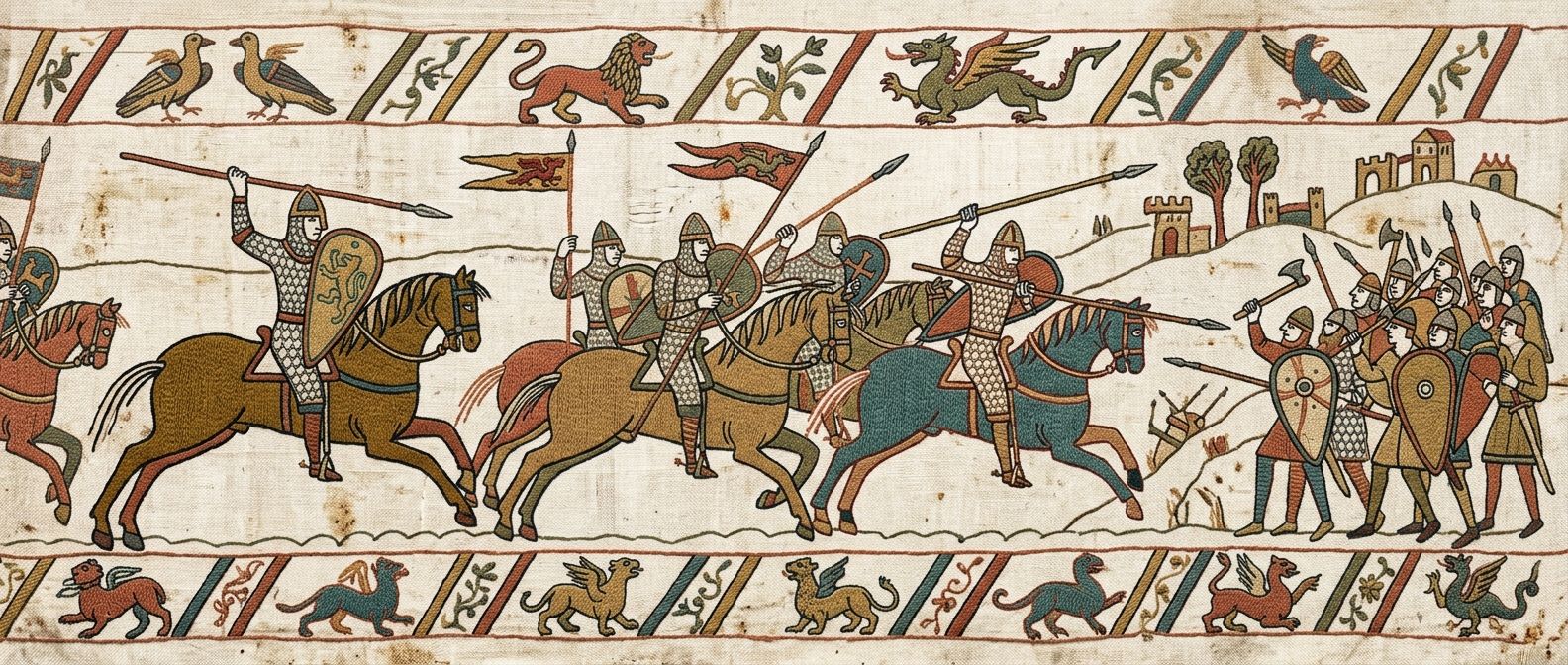
Part of the Bayeux Tapestry – the linen cloth is nearly 70 metres (230 feet) long and is embroidered with coloured wool
The Norman Conquest was the last successful foreign invasion of England and led to many changes in government and social structures in England. Norman French, the language of the new ruling class, influenced the development of the English language as we know it today. Initially the Normans also conquered Wales, but the Welsh gradually won territory back. The Scots and the Normans fought on the border between England and Scotland; the Normans took over some land on the border but did not invade Scotland.
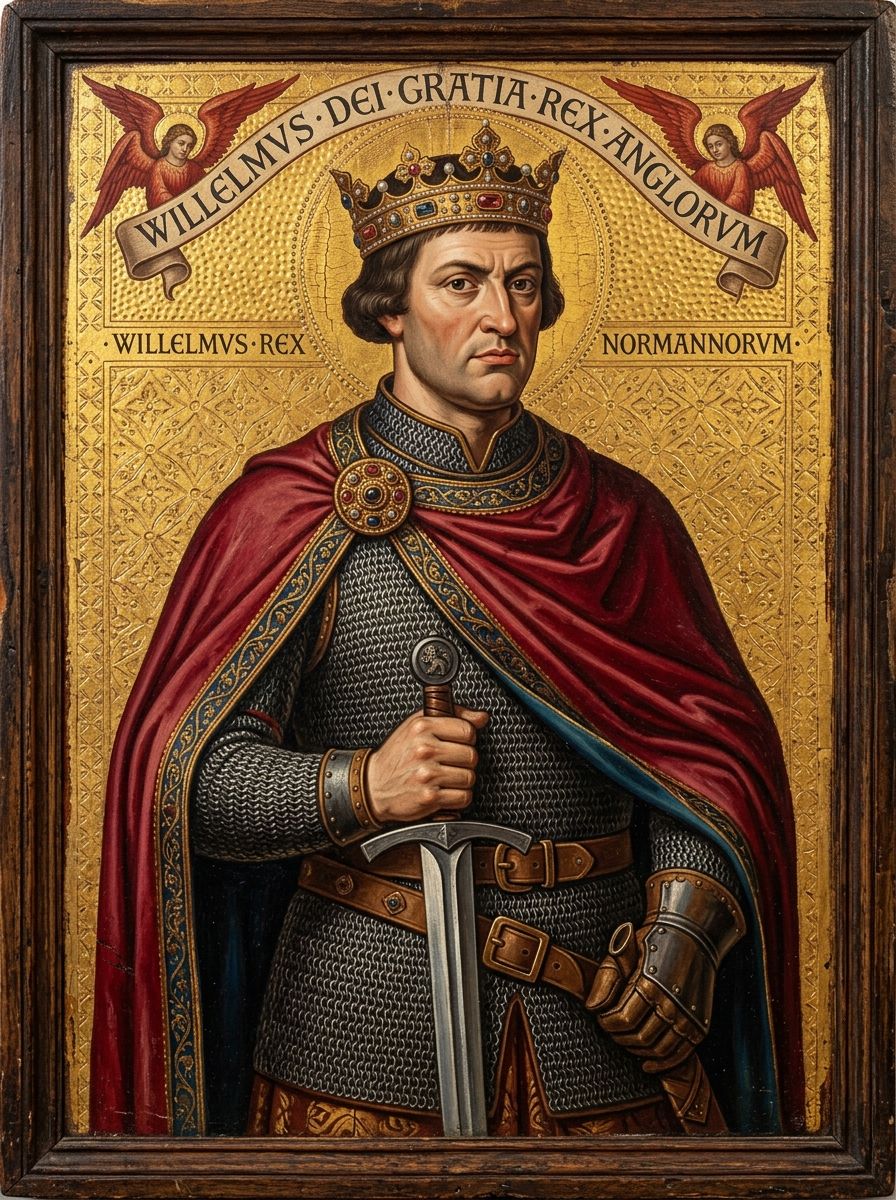
William sent people all over England to draw up lists of all the towns and villages. The people who lived there, who owned the land and what animals they owned were also listed. This was called the Domesday Book. It still exists today and gives a picture of society in England just after the Norman Conquest.
The Middle Ages
The Middle Ages: War at home and abroad
Broadly speaking, the Middle Ages (or medieval period) spans a thousand years, from the end of the Roman Empire in AD 476 up until 1485. However, the focus here is on the period after the Norman Conquest. It was a time of almost constant war.
The English kings fought with the Welsh, Scottish and Irish noblemen for control of their lands. In Wales, the English were able to establish their rule. In 1284 King Edward I of England introduced the Statute of Rhuddlan, which annexed Wales to the Crown of England. Huge castles, including Conwy and Caernarvon, were built to maintain this power. By the middle of the 15th century the last Welsh rebellions had been defeated. English laws and the English language were introduced.
In Scotland, the English kings were less successful. In 1314 the Scottish, led by Robert the Bruce, defeated the English at the Battle of Bannockburn, and Scotland remained unconquered by the English.
At the beginning of the Middle Ages, Ireland was an independent country. The English first went to Ireland as troops to help the Irish king and remained to build their own settlements. By 1200, the English ruled an area of Ireland known as the Pale, around Dublin. Some of the important lords in other parts of Ireland accepted the authority of the English king.
During the Middle Ages, the English kings also fought a number of wars abroad. Many knights took part in the Crusades, in which European Christians fought for control of the Holy Land. English kings also fought a long war with France, called the Hundred Years' War (even though it actually lasted 116 years). One of the most famous battles of the Hundred Years' War was the Battle of Agincourt in 1415, where King Henry V's vastly outnumbered English army defeated the French. The English largely left France in the 1450s.
The Middle Ages: The Black Death
The Normans used a system of land ownership known as feudalism. The king gave land to his lords in return for help in war. Landowners had to send certain numbers of men to serve in the army. Some peasants had their own land but most were serfs. They had a small area of their lord's land where they could grow food. In return, they had to work for their lord and could not move away. The same system developed in southern Scotland. In the north of Scotland and Ireland, land was owned by members of the 'clans' (prominent families).
In 1348, a disease, probably a form of plague, came to Britain. This was known as the Black Death. One third of the population of England died and a similar proportion in Scotland and Wales. This was one of the worst disasters ever to strike Britain. Following the Black Death, the smaller population meant there was less need to grow cereal crops. There were labour shortages and peasants began to demand higher wages. New social classes appeared, including owners of large areas of land (later called the gentry), and people left the countryside to live in the towns. In the towns, growing wealth led to the development of a strong middle class.
In Ireland, the Black Death killed many in the Pale and, for a time, the area controlled by the English became smaller.
The Middle Ages: Legal and political changes
In the Middle Ages, Parliament began to develop into the institution it is today. Its origins can be traced to the king's council of advisers, which included important noblemen and the leaders of the Church.
There were few formal limits to the king's power until 1215. In that year, King John was forced by his noblemen to agree to a number of demands. The result was a charter of rights called the Magna Carta (which means the Great Charter). The Magna Carta established the idea that even the king was subject to the law. It protected the rights of the nobility and restricted the king's power to collect taxes or to make or change laws. In future, the king would need to involve his noblemen in decisions.
In England, parliaments were called for the king to consult his nobles, particularly when the king needed to raise money. The numbers attending Parliament increased and two separate parts, known as Houses, were established. The nobility, great landowners and bishops sat in the House of Lords. Knights, who were usually smaller landowners, and wealthy people from towns and cities were elected to sit in the House of Commons. Only a small part of the population was able to join in electing the members of the Commons.
A similar Parliament developed in Scotland. It had three Houses, called Estates: the lords, the commons and the clergy.
This was also a time of development in the legal system. The principle that judges are independent of the government began to be established. In England, judges developed 'common law' by a process of precedence (that is, following previous decisions) and tradition. In Scotland, the legal system developed slightly differently and laws were 'codified' (that is, written down).
The Middle Ages: A distinct identity
The Middle Ages saw the development of a national culture and identity. After the Norman Conquest, the king and his noblemen had spoken Norman French and the peasants had continued to speak Anglo-Saxon. Gradually these two languages combined to become one English language. Some words in modern English – for example, 'park' and 'beauty' – are based on Norman French words. Others – for example, 'apple', 'cow' and 'summer' – are based on Anglo-Saxon words. In modern English there are often two words with very similar meanings, one from French and one from Anglo-Saxon. 'Demand' (French) and 'ask' (Anglo-Saxon) are examples. By 1400, in England, official documents were being written in English, and English had become the preferred language of the royal court and Parliament.
In the years leading up to 1400, Geoffrey Chaucer wrote a series of poems in English about a group of people going to Canterbury on a pilgrimage. The people decided to tell each other stories on the journey, and the poems describe the travellers and some of the stories they told. This collection of poems is called <em>The Canterbury Tales</em>. It was one of the first books to be printed by William Caxton, the first person in England to print books using a printing press. Many of the stories are still popular. Some have been made into plays and television programmes.
In Scotland, many people continued to speak Gaelic and the Scots language also developed. A number of poets began to write in the Scots language. One example is John Barbour, who wrote <em>The Bruce</em> about the Battle of Bannockburn.
The Middle Ages (continued): Buildings and trade
The Middle Ages also saw a change in the type of buildings in Britain. Castles were built in many places in Britain and Ireland, partly for defence. Today many are in ruins, although some, such as Windsor and Edinburgh, are still in use. Great cathedrals – for example, Lincoln Cathedral – were also built, and many of these are still used for worship. Several of the cathedrals had windows of stained glass, telling stories about the Bible and Christian saints. The glass in York Minster is a famous example.
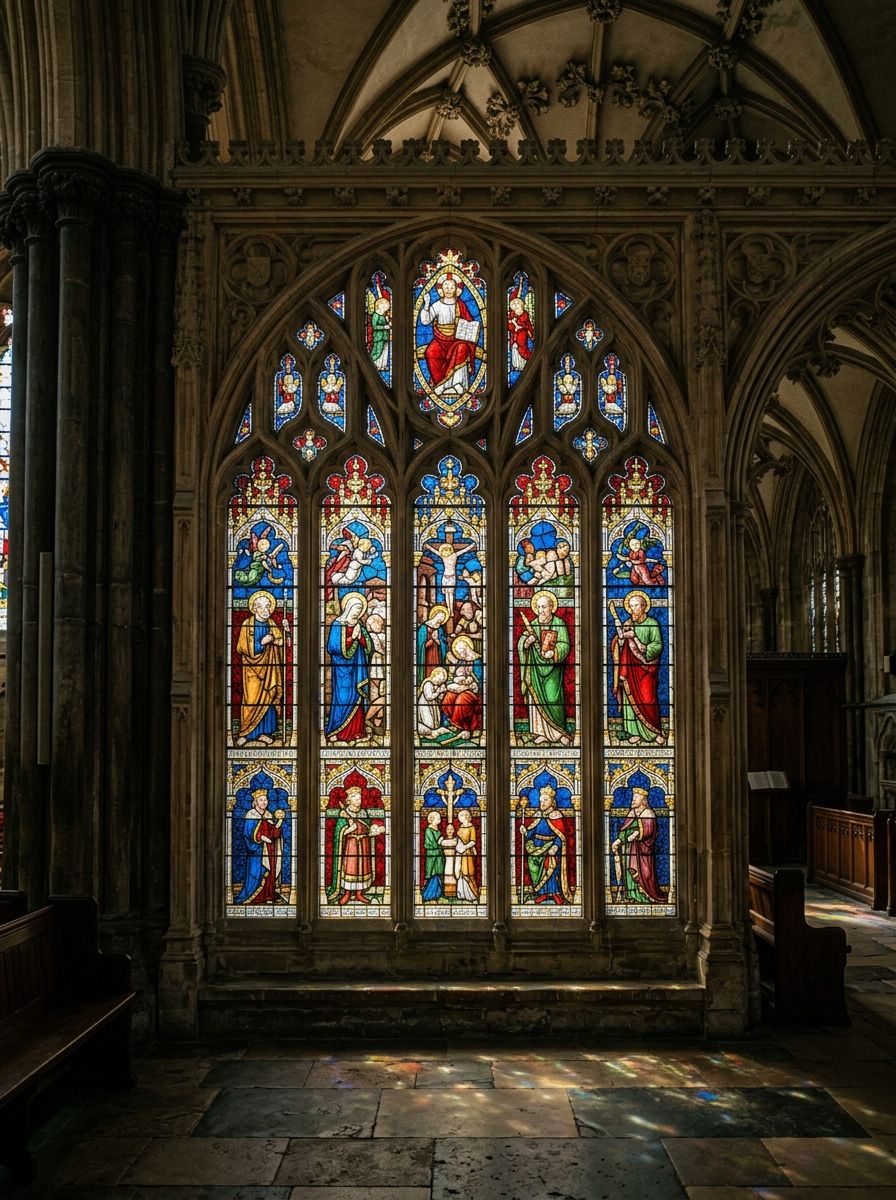
York Minster stained glass
During this period, England was an important trading nation. English wool became a very important export. People came to England from abroad to trade and also to work. Many had special skills, such as weavers from France, engineers from Germany, glass manufacturers from Italy and canal builders from Holland.
The Middle Ages: The Wars of the Roses
In 1455, a civil war was begun to decide who should be king of England. It was fought between the supporters of two families: the House of Lancaster and the House of York. This war was called the Wars of the Roses, because the symbol of Lancaster was a red rose and the symbol of York was a white rose. The war ended with the Battle of Bosworth Field in 1485. King Richard III of the House of York was killed in the battle and Henry Tudor, the leader of the House of Lancaster, became King Henry VII. Henry then married King Richard's niece, Elizabeth of York, and united the two families. Henry was the first king of the House of Tudor. The symbol of the House of Tudor was a red rose with a white rose inside it as a sign that the Houses of York and Lancaster were now allies.
The Tudors and Stuarts
The Tudors: Henry VII and Henry VIII
After his victory at Bosworth Field in 1485, Henry VII wanted to make sure England stayed peaceful and that his own position as king was secure. He deliberately strengthened the central administration of England and reduced the power of the nobles. He was thrifty, and built up the monarchy's financial reserves. When he died, his son Henry VIII continued the policy of centralising power.
Henry VIII is most famous for two things: breaking away from the Church of Rome, and marrying six times. Learn the six wives in order, because the test asks about them. First was Catherine of Aragon, a Spanish princess who had several children, but only her daughter Mary survived — when Catherine was too old to give him another child, Henry decided to divorce her, hoping a different wife would give him the son he wanted. Second was Anne Boleyn, who was English; she gave birth to a daughter, Elizabeth, and was later executed at the Tower of London, accused of taking lovers. Third was Jane Seymour, whom Henry married after Anne's execution; she gave him the son he wanted, Edward, but she died shortly after the birth. Fourth was Anne of Cleves, a German princess Henry married for political reasons and divorced soon after. Fifth was Catherine Howard, a cousin of Anne Boleyn, who was also executed for taking lovers. Sixth and last was Catherine Parr, a widow who married Henry late in his life; she survived him and married again, but died soon after.
The break with Rome and the Reformation
To divorce his first wife, Henry needed the approval of the Pope — and the Pope refused. So Henry established the Church of England, with the king, not the Pope, as its head. In this new Church, the king had the power to appoint bishops and order how people should worship.
At the same time, the Reformation was happening across Europe. This was a movement against the authority of the Pope and the ideas and practices of the Roman Catholic Church. The Protestants formed their own churches. They read the Bible in their own languages instead of in Latin, they did not pray to saints or at shrines, and they believed that a person's own relationship with God was more important than submitting to the authority of the Church. Protestant ideas gradually gained strength in England, Wales and Scotland during the 16th century. In Ireland, however, attempts by the English to impose Protestantism — alongside laws taking land away from the Irish landholders — led to rebellion and to brutal fighting.
One more fact from Henry VIII's reign is a favourite of the test: during his reign, Wales became formally united with England by the Act for the Government of Wales. The Welsh sent representatives to the House of Commons, and the Welsh legal system was reformed.
Edward VI, Mary, and Elizabeth I
Henry VIII was succeeded by his son Edward VI, who was strongly Protestant. During his reign, the Book of Common Prayer was written to be used in the Church of England — a version of it is still used in some churches today. Edward died at the age of 15 after ruling for just six years, and his half-sister Mary became queen. Mary was a devout Catholic and persecuted Protestants — which is why she is remembered as a fierce opponent of the Reformation. Mary also died after a short reign, and the next monarch was her half-sister, Elizabeth.
Elizabeth I was the daughter of Henry VIII and Anne Boleyn, and she was a Protestant. She re-established the Church of England as the official Church in England. Everyone had to attend their local church and there were laws about the type of religious services and prayers which could be used — but Elizabeth did not ask about people's real beliefs, and this sensible balance is part of why she succeeded in finding a compromise on the religious disagreements that had divided the country. Elizabeth became one of the most popular monarchs in English history, particularly after 1588, when the English defeated the Spanish Armada — a large fleet of ships which Spain had sent to conquer England and restore Catholicism.
The Reformation in Scotland and Mary, Queen of Scots
Scotland had also been strongly influenced by Protestant ideas. In 1560, the predominantly Protestant Scottish Parliament abolished the authority of the Pope in Scotland, and Roman Catholic religious services became illegal. A Protestant Church of Scotland with an elected leadership was established — but, unlike in England, this was not a state Church.
The queen of Scotland, Mary Stuart — known as 'Mary, Queen of Scots' — was a Catholic. She was only a week old when her father died and she became queen. Much of her childhood was spent in France; when she returned to Scotland, she was the centre of a power struggle between different groups. When her husband was murdered, Mary was suspected of involvement and fled to England. She gave her throne to her Protestant son, James VI of Scotland. Her cousin Elizabeth I of England kept Mary a prisoner for 20 years, and she was eventually executed, accused of plotting against Elizabeth.
Exploration, poetry and drama
The Elizabethan period in England was a time of growing patriotism: a feeling of pride in being English. English explorers sought new trade routes and tried to expand British trade into the Spanish colonies in the Americas, and English settlers began to colonise the eastern coast of America — an expansion that would continue in the next century. Sir Francis Drake, one of the commanders in the defeat of the Spanish Armada, was one of the founders of England's naval tradition; his ship, the Golden Hind, was one of the first to sail right around — 'circumnavigate' — the world.
The Elizabethan period is also remembered for the richness of its poetry and drama, especially the plays and poems of William Shakespeare (1564–1616). Born in Stratford-upon-Avon, Shakespeare was a playwright and actor who wrote many poems and plays. He dramatised great events, but he was also one of the first to portray ordinary Englishmen and women, and his work strongly influenced the English language itself — he invented many words and phrases still common today. Lines from his plays and poems that are often still quoted include 'Once more unto the breach' (Henry V), 'To be or not to be' (Hamlet) and 'A rose by any other name would smell as sweet' (Romeo and Juliet). His plays were performed at the Globe Theatre in London, and a modern copy of the Globe stands on the south bank of the Thames today.
James I and the King James Bible
Elizabeth I never married, and she died in 1603 with no children of her own. Her heir was her cousin James VI of Scotland, who became King James I of England, Wales and Ireland — though Scotland remained a separate country. One achievement of James' reign every candidate should know: a new translation of the Bible into English, known as the 'King James Bible' or the 'Authorised Version'. It was not the first English Bible, but it is a version which continued to be used in many Protestant churches for a very long time — and still is today.
Ireland
During this period, Ireland was an almost completely Catholic country. Henry VII and Henry VIII had extended English control outside the Pale and had established English authority over the whole country. Henry VIII took the title 'King of Ireland'. English laws were introduced and local leaders were expected to follow the instructions of the Lord Lieutenants in Dublin.
During the reigns of Elizabeth I and James I, many people in Ireland opposed rule by the Protestant government in England. There were a number of rebellions. The English government encouraged Scottish and English Protestants to settle in Ulster, the northern province of Ireland, taking over the land from Catholic landholders. These settlements were known as plantations. Many of the new settlers came from south-west Scotland and other land was given to companies based in London. James later organised similar plantations in several other parts of Ireland. This had serious long-term consequences for the history of England, Scotland and Ireland.
The rise of Parliament
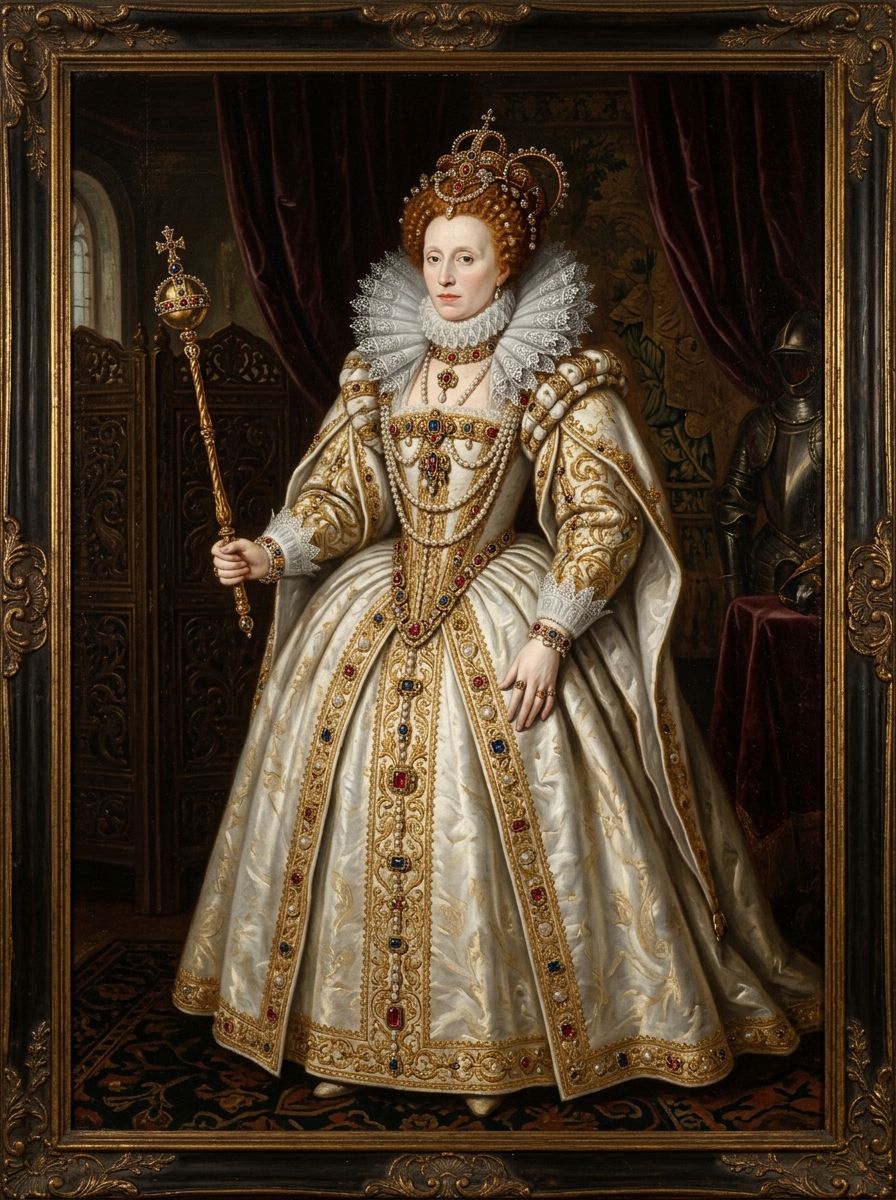
Elizabeth I was very skilled at managing Parliament. During her reign, she was successful in balancing her wishes and views against those of the House of Lords and those of the House of Commons, which was increasingly Protestant in its views.
James I and his son Charles I were less skilled politically. Both believed in the 'Divine Right of Kings': the idea that the king was directly appointed by God to rule. They thought that the king should be able to act without having to seek approval from Parliament. When Charles I inherited the thrones of England, Wales, Ireland and Scotland, he tried to rule in line with this principle. When he could not get Parliament to agree with his religious and foreign policies, he tried to rule without Parliament at all. For 11 years, he found ways in which to raise money without Parliament's approval but eventually trouble in Scotland meant that he had to recall Parliament.
The beginning of the English Civil War
Charles I wanted the worship of the Church of England to include more ceremony and introduced a revised Prayer Book. He tried to impose this Prayer Book on the Presbyterian Church in Scotland and this led to serious unrest. A Scottish army was formed and Charles could not find the money he needed for his own army without the help of Parliament. In 1640, he recalled Parliament to ask it for funds. Many in Parliament were Puritans, a group of Protestants who advocated strict and simple religious doctrine and worship. They did not agree with the king's religious views and disliked his reforms of the Church of England. Parliament refused to give the king the money he asked for, even after the Scottish army invaded England.
Another rebellion began in Ireland because the Roman Catholics in Ireland were afraid of the growing power of the Puritans. Parliament took this opportunity to demand control of the English army — a change that would have transferred substantial power from the king to Parliament. In response, Charles I entered the House of Commons and tried to arrest five parliamentary leaders, but they had been warned and were not there. (No monarch has set foot in the Commons since.) Civil war between the king and Parliament could not now be avoided and began in 1642. The country split into those who supported the king (the Cavaliers) and those who supported Parliament (the Roundheads).
Oliver Cromwell and the English republic
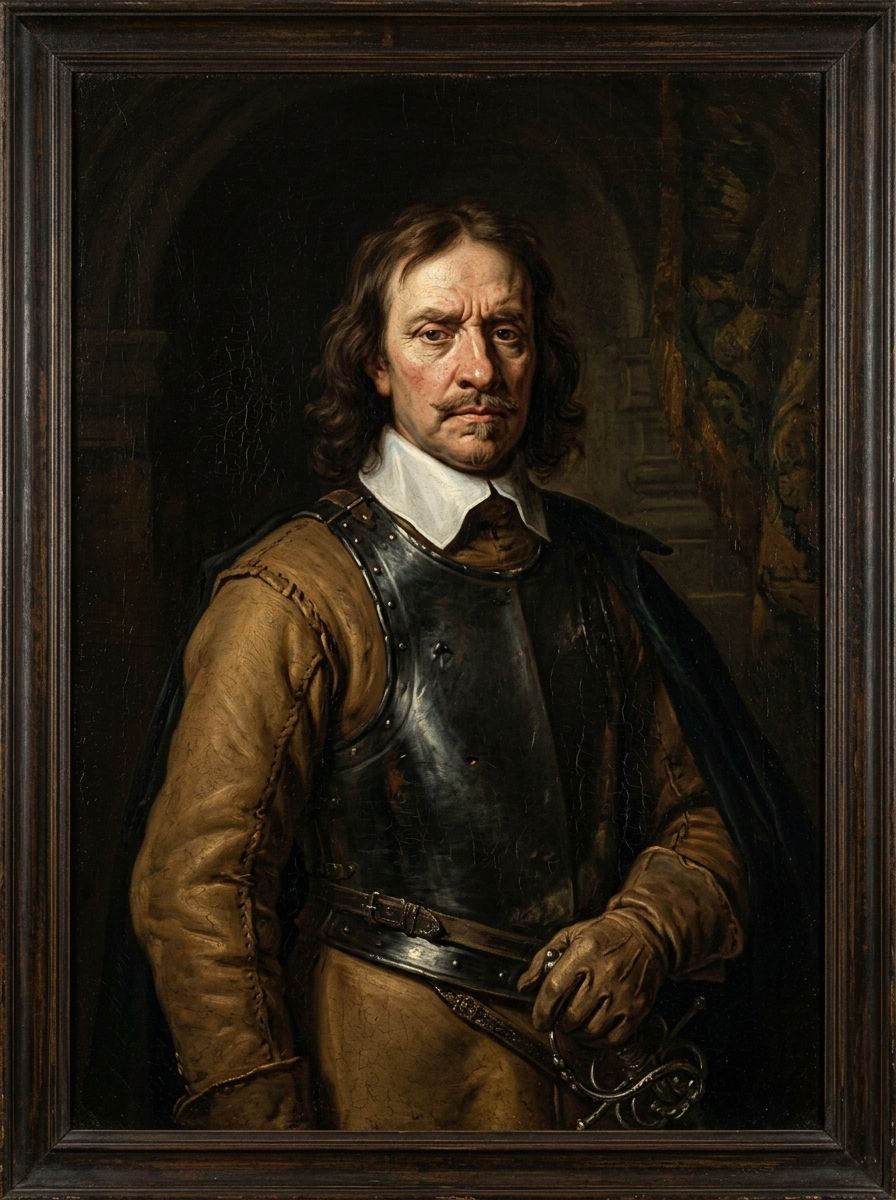
Oliver Cromwell was the leader of the English republic.
The king's army was defeated at the Battles of Marston Moor and Naseby. By 1646, it was clear that Parliament had won the war. Charles was held prisoner by the parliamentary army. He was still unwilling to reach any agreement with Parliament and in 1649 he was executed.
England declared itself a republic, called the Commonwealth. It no longer had a monarch. For a time, it was not totally clear how the country would be governed. For now, the army was in control. One of its generals, Oliver Cromwell, was sent to Ireland, where the revolt which had begun in 1641 still continued and where there was still a Royalist army. Cromwell was successful in establishing the authority of the English Parliament but did this with such violence that even today Cromwell remains a controversial figure in Ireland.
The Scots had not agreed to the execution of Charles I and declared his son Charles II to be king. He was crowned king of Scotland and led a Scottish army into England. Cromwell defeated this army in the Battles of Dunbar and Worcester. Charles II escaped from Worcester, famously hiding in an oak tree on one occasion, and eventually fled to Europe. Parliament now controlled Scotland as well as England and Wales.
After his campaign in Ireland and victory over Charles II at Worcester, Cromwell was recognised as the leader of the new republic. He was given the title of Lord Protector and ruled until his death in 1658. When Cromwell died, his son, Richard, became Lord Protector in his place but was not able to control the army or the government. Although Britain had been a republic for 11 years, without Oliver Cromwell there was no clear leader or system of government. Many people in the country wanted stability. People began to talk about the need for a king.
The Restoration
In May 1660, Parliament invited Charles II to come back from exile in the Netherlands. He was crowned King Charles II of England, Wales, Scotland and Ireland. Charles II made it clear that he had 'no wish to go on his travels again'. He understood that he could not always do as he wished but would sometimes need to reach agreement with Parliament. Generally, Parliament supported his policies. The Church of England again became the established official Church. Both Roman Catholics and Puritans were kept out of power.
During Charles II's reign, in 1665, there was a major outbreak of plague in London. Thousands of people died, especially in poorer areas. The following year, a great fire destroyed much of the city, including many churches and St Paul's Cathedral. London was rebuilt with a new St Paul's, which was designed by a famous architect, Sir Christopher Wren. Samuel Pepys wrote about these events in a diary which was later published and is still read today.
The Habeas Corpus Act became law in 1679. This was a very important piece of legislation which remains relevant today. Habeas corpus is Latin for 'you must present the person in court'. The Act guaranteed that no one could be held prisoner unlawfully. Every prisoner has a right to a court hearing.
Charles II was interested in science. During his reign, the Royal Society was formed to promote 'natural knowledge'. This is the oldest surviving scientific society in the world. Among its early members were Sir Edmund Halley, who successfully predicted the return of the comet now called Halley's Comet, and Sir Isaac Newton.
Isaac Newton (1643–1727)
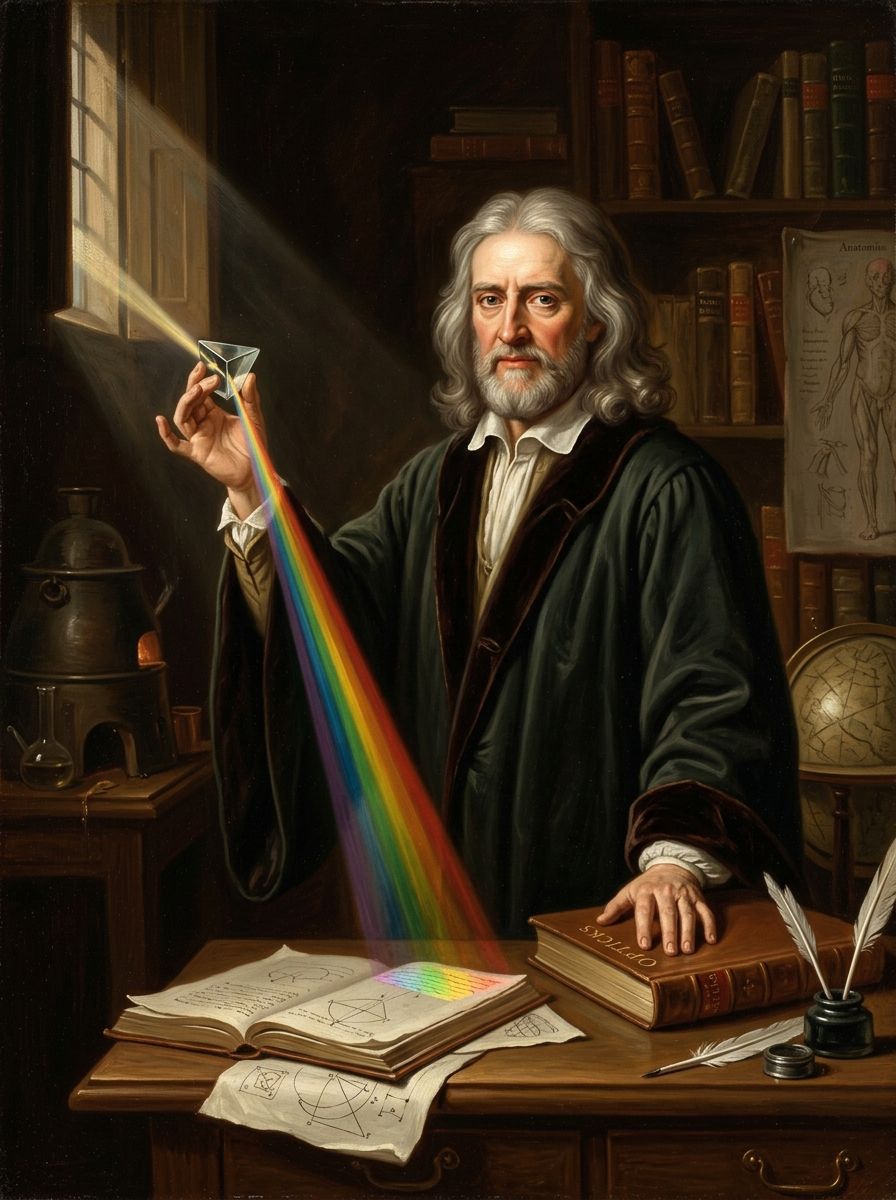
Born in Lincolnshire, eastern England, Isaac Newton first became interested in science when he studied at Cambridge University. He became an important figure in the field. His most famous published work was <em>Philosophiae Naturalis Principia Mathematica</em> ('Mathematical Principles of Natural Philosophy'), which showed how gravity applied to the whole universe. Newton also discovered that white light is made up of the colours of the rainbow. Many of his discoveries are still important for modern science.
James II — A Catholic king
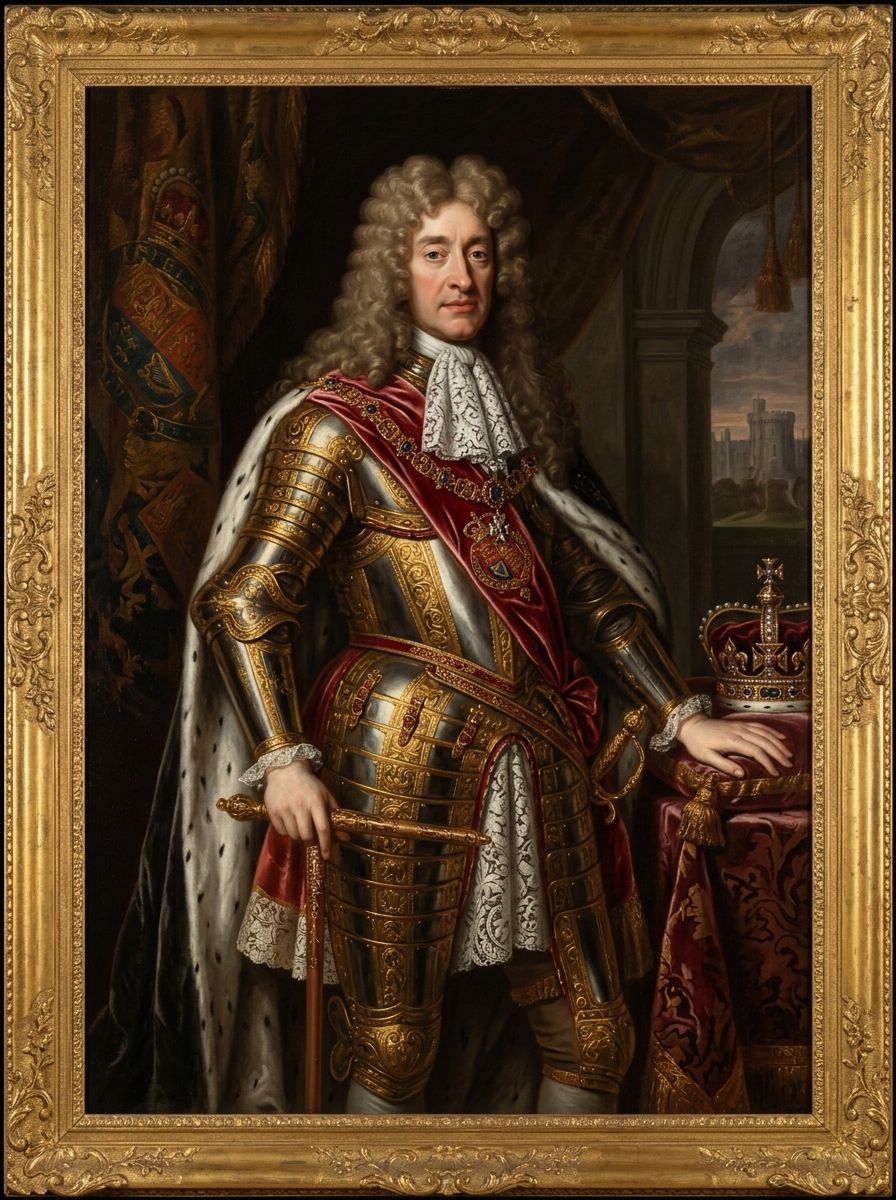
Charles II had no legitimate children. He died in 1685 and his brother, James, who was a Roman Catholic, became King James II in England, Wales and Ireland and King James VII of Scotland. James favoured Roman Catholics and allowed them to be army officers, which an Act of Parliament had forbidden. He did not seek to reach agreements with Parliament and arrested some of the bishops of the Church of England. People in England worried that James wanted to make England a Catholic country once more. However, his heirs were his two daughters, who were both firmly Protestant, and people thought that this meant there would soon be a Protestant monarch again. Then, James's wife had a son. Suddenly, it seemed likely that the next monarch would not be a Protestant after all.
The Glorious Revolution
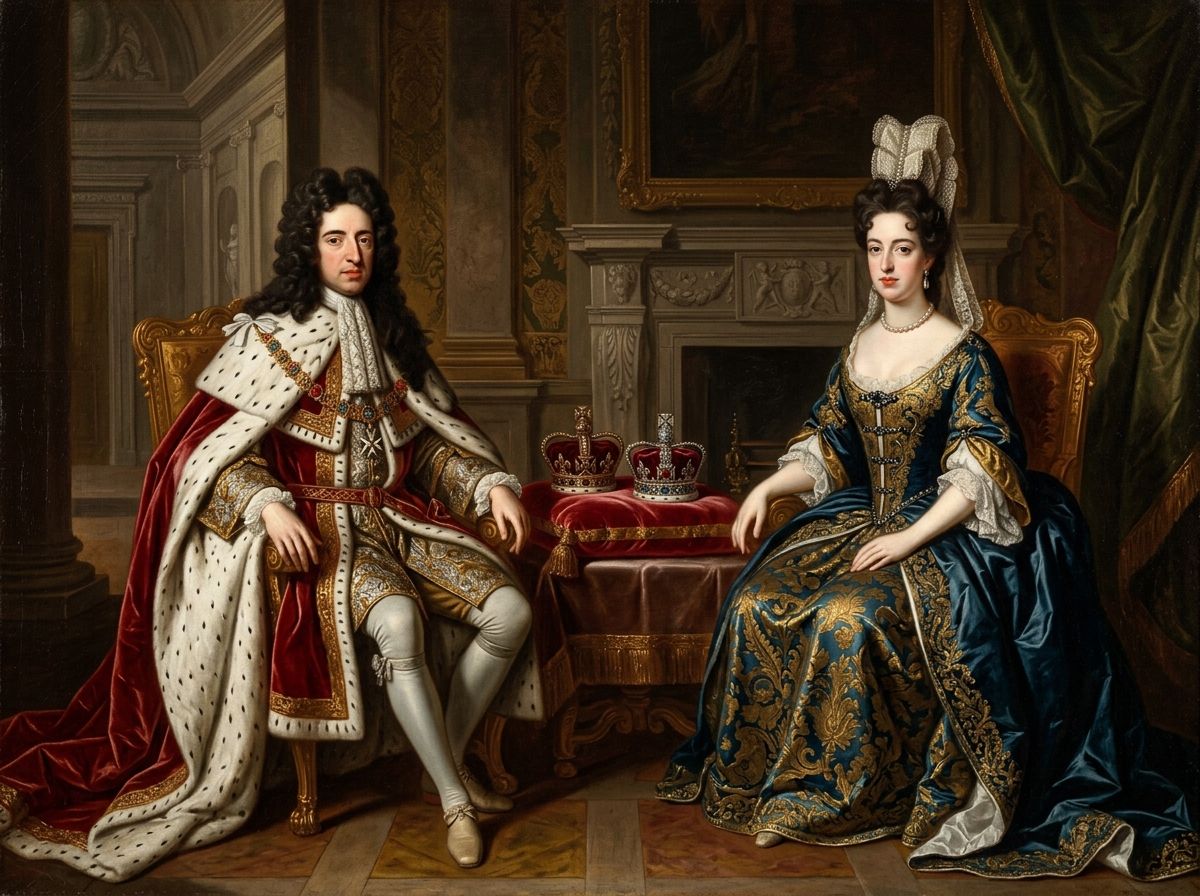
James II's elder daughter, Mary, was married to her cousin William of Orange, the Protestant ruler of the Netherlands. In 1688, important Protestants in England asked William to invade England and proclaim himself king. When William reached England, there was no resistance. James fled to France and William took over the throne, becoming William III in England, Wales and Ireland, and William II of Scotland. William ruled jointly with Mary. This event was later called the 'Glorious Revolution' because there was no fighting in England and because it guaranteed the power of Parliament, ending the threat of a monarch ruling on his or her own as he or she wished.
James II wanted to regain the throne and invaded Ireland with the help of a French army. William defeated James II at the Battle of the Boyne in Ireland in 1690, an event which is still celebrated by some in Northern Ireland today. William re-conquered Ireland and James fled back to France. Many restrictions were placed on the Roman Catholic Church in Ireland and Irish Catholics were unable to take part in the government.
There was also support for James in Scotland. An attempt at an armed rebellion in support of James was quickly defeated at Killiecrankie. All Scottish clans were required formally to accept William as king by taking an oath. The MacDonalds of Glencoe were late in taking the oath and were all killed. The memory of this massacre meant some Scots distrusted the new government.
Some continued to believe that James was the rightful king, particularly in Scotland. Some joined him in exile in France; others were secret supporters. James' supporters became known as Jacobites.